Wall Street watches AI spend, debt ceiling, and trade as polls open
Investors are focused on how the midterm results will shape fiscal policy and global trade relations.
By Kevin Iyer ·

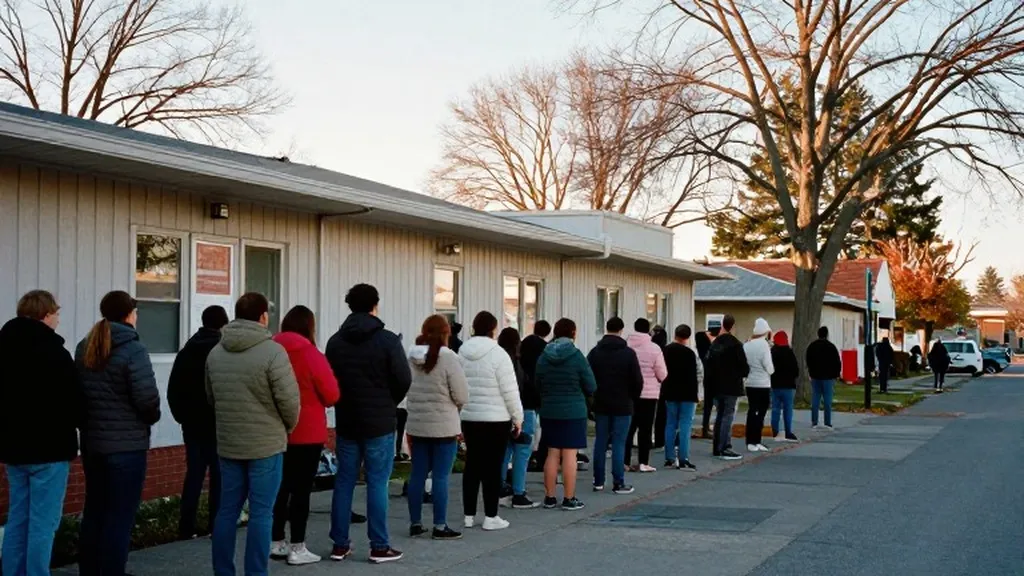
As polls open across the nation on this Tuesday, the financial world is looking beyond the simple tally of seats in Congress. Wall Street is closely monitoring how the election results will influence major economic issues, including the scale of artificial intelligence spending, the negotiation of the debt ceiling, and the state of trade relations with key allies. These factors are central to investor confidence as they assess the future fiscal direction of the country.
The Associated Press describes the current election as a referendum on the second term of President Donald Trump. The report notes that many voters are struggling with high prices and are angry over an unpopular war with Iran. This sentiment is reflected in recent polling and NORC, which indicates that 35 percent of U.S. Adults approve of the president's job performance. Only 25 percent approve of his handling of the economy, and about seven in ten adults say the country is heading in the wrong direction. Most of those who feel the country is off track blame the president for high prices.
The stakes for the U.S. House of Representatives are high, with all 435 seats up for grabs. Republicans currently hold 218 seats, while Democrats hold 214, with one independent seat and some vacancies. Democrats need a net gain of three districts to achieve a majority, whereas Republicans can afford to lose no more than two seats. Ballotpedia identifies 46 battleground districts, split between 25 districts held by Democrats and 21 held by Republicans. These races will determine the balance of power in the chamber for the final two years of the current presidential term.
In the U.S. Senate, 35 of the 100 seats are on the ballot. This includes 33 regular elections and two special elections for the remaining terms of Florida and Ohio senators. Republicans hold 53 seats, Democrats hold 45, and two independents caucus with the Democrats. Democrats require a net gain of four seats to secure a majority, while Republicans can lose only two. Eleven senators are not running for re-election, which includes four Democrats and seven Republicans. The winners of these races will begin their six-year terms on January 3, 2027.
Governor's races are also a focal point for both parties and investors. Thirty-six governorships are up for election, with Republicans holding 26 offices and Democrats holding 24 heading into the vote. Of the offices on the ballot, each party holds 18. Democrats would need a net gain of two governorships to achieve a nationwide majority, a status Republicans have held since 2010. Nineteen of these races do not have an incumbent on the ballot, largely due to term limits or voluntary departures. New congressional maps in six states, including California, Florida, Missouri, North Carolina, Tennessee, and Texas, are also influencing the dynamics of these races.
The mood among voters is shaped by economic pressures. More than 57 million people had already voted as of Monday, surpassing the early vote totals from four years ago in many closely watched states. Republicans are bracing for the possibility of losing the House while fighting to hold the Senate, with one or two seats potentially tipping the balance in either chamber. Democrats, described as cautiously optimistic, are focused on gaining control to initiate investigations and oversight. House Democratic Leader Hakeem Jeffries has outlined a 100-day agenda focusing on the cost of living and oversight if his party gains control.
Campaign spending this year is likely to be the most expensive in history. Republican committees outraised and outspent Democratic committees, aided by Trump-affiliated groups and support from Elon Musk. However, at the candidate level, Democrats outraised their opponents. A significant portion of Republican general election TV ad spending, specifically 88.1 percent, went to states and districts that Trump won in 2024. This included more than $850 million spent in areas where he won by 10 points or more, highlighting the party's focus on defending its base.
Party leaders are emphasizing turnout as a critical factor. Joe Gruters, the RNC Chairman, stated that everything depends on turnout, adding that if they turn out their voters, they win. In contrast, Suzan DelBene, the DCCC Chair, said the American people are angry and want change. Voters are expressing their concerns in their own words. Mark Barker of Palm Beach Gardens, Florida, said he has been following Trump and thinks he is doing an awesome job. James Moore, a librarian in Raleigh, North Carolina, noted that he is paying more taxes, more for healthcare, and more for everything else.
The election administration has faced some legal challenges. A federal judge temporarily barred the Trump administration from carrying out a plan to prevent noncitizen voting, a move critics say risks disenfranchising eligible voters. Another judge ordered the administration to stop demanding that California election officials segregate ballots cast by people on lists of suspected noncitizens. The U.S. Postal Service has added hours, staff, and special lines to ensure mail ballots are counted on time. These administrative steps are crucial for the integrity of the vote as the day progresses.
The financial implications of the election extend to global trade and alliance dynamics. Investors are watching how the composition of Congress will affect the administration's ability to negotiate trade deals and manage the national debt. The outcome will also signal the political stability of the U.S. As a partner to its allies. As polls close throughout the day, the market will react to the emerging trends in key battleground states and districts, providing early indicators of the fiscal and trade policy direction for the coming years.