Midterm math: Why the president's party rarely holds its ground
With polls open, both parties deploy distinct strategies to overcome the historical trend of seat loss for the party in power.
By Christopher Singh ·
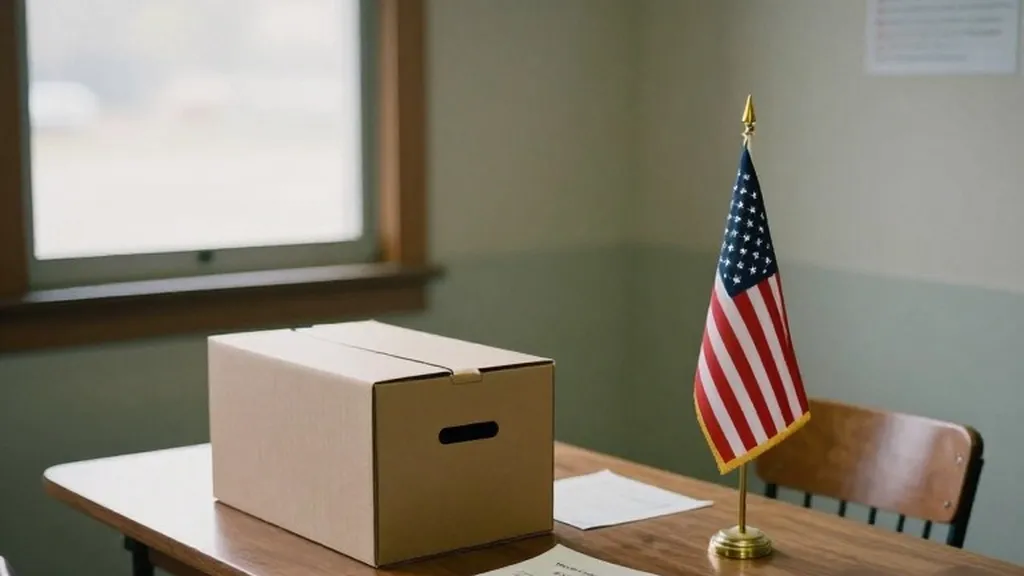
History suggests that voters tend to reward the opposition party during midterm elections held halfway through a president's term. This pattern has been a consistent feature of American politics for decades, creating a baseline expectation that the party controlling the White House will lose seats in Congress. Today, as voters cast ballots in the 2026 midterms, both Republicans and Democrats are actively working to break this historical cycle or capitalize on it.
The Associated Press describes the current election as a referendum on President Donald Trump's second term. With the president's party holding the White House, the midterm pattern predicts a net loss of seats for Republicans. However, the party in power is not passive in this dynamic. Republicans are bracing for a potential loss of the House while fighting hard to retain their Senate majority. Their strategy relies heavily on turnout and the redistricting changes implemented in several states.
Republican National Committee Chairman Joe Gruters emphasized that everything depends on turnout. He stated that if the party turns out its voters, it wins, which is what the campaign has been planning for. This approach focuses on mobilizing the base rather than expanding the coalition. The party also benefits from new congressional maps in six states, including California, Florida, and Texas, which were drawn after the mid-decade redistricting process.
The Democrats, currently out of power, are described by the AP as cautiously optimistic. They are using the midterm pattern to their advantage, arguing that voters are ready for a change in leadership. Democratic Congressional Campaign Committee Chair Rep. Suzan DelBene said the American people are angry and want change. This narrative aligns with polling data from AP-NORC, which shows that about seven in 10 U.S. adults say the country is heading in the wrong direction.
The issues driving this anger are economic. The AP notes that voters are struggling with high prices and are angry over an unpopular war with Iran. Only 35% of U.S. adults approve of Trump's job performance, while 25% approve of his handling of the economy. Most voters blame the president for high prices. This dissatisfaction provides Democrats with a clear message to voters in battleground districts and states.
Money plays a significant role in how both parties attempt to beat or leverage the midterm pattern. The 2026 elections are likely to be the most expensive in history. Republican committees have outraised and outspent Democratic committees, helped by Trump-affiliated groups and Elon Musk. However, at the candidate level, Democrats have outraised their opponents. This disparity highlights different funding strategies for the two parties in this cycle.
The Senate race is particularly tight, with 35 seats up for election. Democrats need a net gain of four seats to take control of the chamber, while Republicans can lose only two. Ballotpedia identifies 13 Senate races as battlegrounds. In states like Maine and Michigan, which are rated as toss-ups or leaning Democratic, the race is often framed around economic strain and tariffs. In contrast, in states like Kansas and Iowa, which are rated as toss-ups or leaning Republican, the focus is on turning out the base.
The governorship races also reflect this dynamic. Democrats hope to hold a majority of governorships for the first time in two decades. They are defending five governorships in states that Trump won in 2024, including Arizona, Kansas, and Wisconsin. Republicans are defending two governorships in states that Harris won, such as New Hampshire and Vermont. These races are competitive in states like Georgia, Nevada, and Ohio, where the midterm pattern could be tested at the state level.
The administration has taken steps to ensure its narrative reaches voters. Trump held dozens of rallies, ending his schedule in Salina, Kansas, where he asked voters to pretend he was on the ballot. His administration has also filed lawsuits in Alaska and California related to voting procedures. These actions are part of a broader effort to shape the outcome of the election and counter the historical trend of seat loss for the president's party.
As polls close across the country, the midterm pattern remains a central factor in how both parties view the night. Republicans are focused on holding the Senate and limiting losses in the House, while Democrats are pushing for a net gain in both chambers. The final result will determine who controls Congress for the president's final two years and set the stage for the 2028 presidential race.
The U.S. Postal Service has added hours and staff to ensure mail ballots are counted on time, a logistical necessity given the high volume of early voting. More than 57 million people had already voted as of Monday, surpassing the early vote of four years ago in many closely watched states. This high turnout is a key factor in how both parties believe they can beat the midterm pattern and achieve their respective goals.