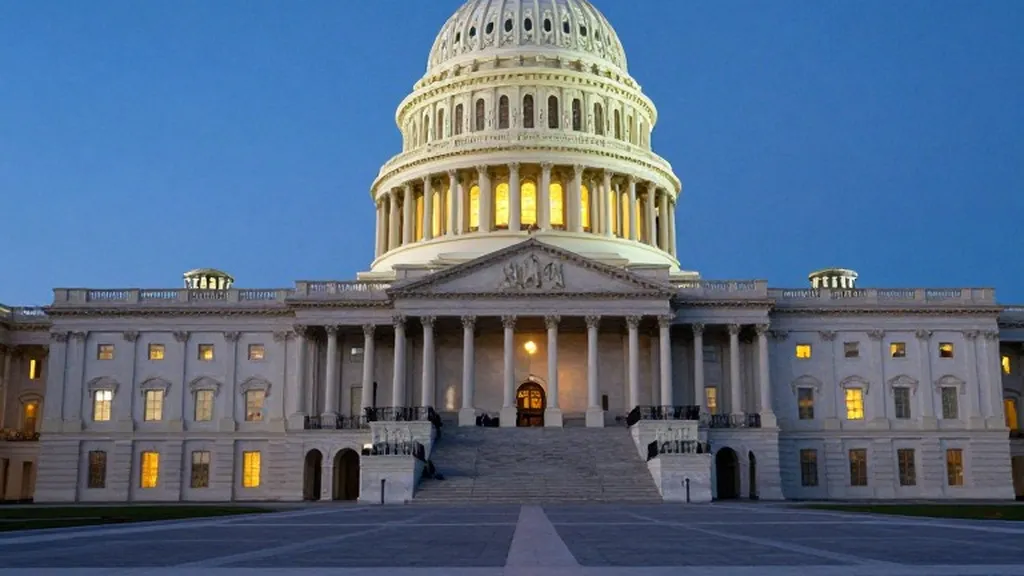
Democrats seize both chambers in historic wave
Republicans suffered their worst midterm defeat in a generation as Democrats gained control of the House and Senate, forcing a major reshuffling of the White House leadership.
By Christopher Singh ·

The 2026 midterm elections delivered a decisive victory for the Democratic Party, which has secured majorities in both the U.S. House and the U.S. Senate. As of 4:00 p.m. EST on November 6, Democrats hold at least a 250-157 majority in the House and a 54-44 majority in the Senate. This outcome marks a significant shift in power, as Democrats picked up at least 43 House seats and seven Senate seats, all of which were previously held by Republicans. The net loss of at least seven U.S. Senate seats places this election in the top 20% of historical midterm results in terms of seat swings against a president's party, a threshold often defined as a wave election.
The results represent a historic win for Democratic candidates, including victories in areas that Republicans had held for decades. This broad-based success has led to the Republican Party losing control of both chambers of Congress for the first time in several years. The shift in legislative power is expected to reshape the balance of the federal government, giving Democrats the ability to influence the agenda and oversight of the executive branch led by President Donald Trump. The scale of the Democratic gain is significant enough to alter the political landscape for the remainder of the president's term.
The election results have triggered an immediate and dramatic transition within the White House. President Donald Trump announced on Friday that he is replacing his longtime adviser Susie Wiles with aide Stephen Miller to serve as the next chief of staff. Miller, who is widely known as the architect of the administration's hard-line immigration policies, is among the most determined members of Trump's inner circle. This change at the heart of the administration follows a period of turmoil and comes as the president's party faces deep losses in the midterms. The move signals a potential shift in the administration's internal dynamics and its approach to governing with a Democratic-controlled Congress.
The White House has also faced scrutiny over its communications strategy in the wake of the election. President Trump stated on Saturday that he has offered the job of White House press secretary to UFC boss Dana White. Trump posted on social media that he made the offer to "the Great Dana White, a violent Fighter and Warrior," describing him as a press secretary like none other. The president requested that White bring along several UFC fighters as assistants to help defend the administration against what Trump called the Lunatic Left. The White House did not immediately confirm the announcement, and White was in London for a boxing event when the news broke.
The offer to White comes as the administration struggles with a period of major transition. The position of press secretary had been vacant since Karoline Leavitt left at the end of August. The administration briefly tried out Katie Zacharia in the role, but she left after five days following a sole appearance before reporters that was marked by discomfort. Trump remains without a permanent chief spokesperson as he navigates the new political reality. The unconventional nature of the offer to a professional sports executive has drawn attention to the president's preference for bold and unorthodox staffing choices.
Beyond the federal government, Democrats have made significant gains in state and local offices. The party has won a plurality of state government trifectas and a majority of governorships for the first time since before the 2010 elections. As of 4:00 p.m. EST on November 6, Democrats have won 22 of the 36 gubernatorial races, with two remaining uncalled. Five of these governorships changed party control, all shifting from Republican to Democratic hands. This statewide success complements the federal victories and suggests a broad shift in voter sentiment across the country.
In the state legislative chambers, Democrats have also secured a significant advantage. They have won 46 of the 88 state legislative chambers on the ballot, with Republicans winning 39. One chamber went to a bipartisan coalition, and two remain uncalled. Twelve state legislative chambers changed party control, with all twelve shifting to Democratic control. This outcome means that Democrats will have the ability to influence state budgets and laws in a majority of states, further solidifying their national gains. The shift in state power is expected to have long-term implications for elections and policy in those states.
The election results have also highlighted the competitive nature of the race in Mississippi, where Democrat Scott Colom is challenging Republican Sen. Cindy Hyde-Smith for a U.S. Senate seat. Colom has not yet been declared the winner, but the local prosecutor was welcomed as a historic figure in Jackson, where civil rights leaders once organized. The state is still tallying ballots that could make Colom the first Black senator from this Deep South state since post-Civil War Reconstruction. The possibility of Colom defeating Hyde-Smith has put many Black voters in the state between cautious optimism and outright celebration.
Colom has stated that ballots tallied since Tuesday's election lean in his favor, and he has expressed confidence in the local officials who are examining absentee and provisional ballots. He noted that Hyde-Smith has not appeared publicly since election night, despite declaring victory despite a razor-thin margin with ballots still uncounted. Hyde-Smith posted on social media that the election is not over and that her team is working across Mississippi to monitor the remaining ballots and protect the integrity of the process. The precise number of outstanding ballots is not known, but the pool includes absentee ballots that are being received and examined by local officials before deadlines next week.