Trump's rally strategy and the distance candidates kept from the president
With approval numbers in flux and fraud claims circulating, candidates navigated a complex relationship with the president during the 2026 midterms.
By Christopher Singh ·
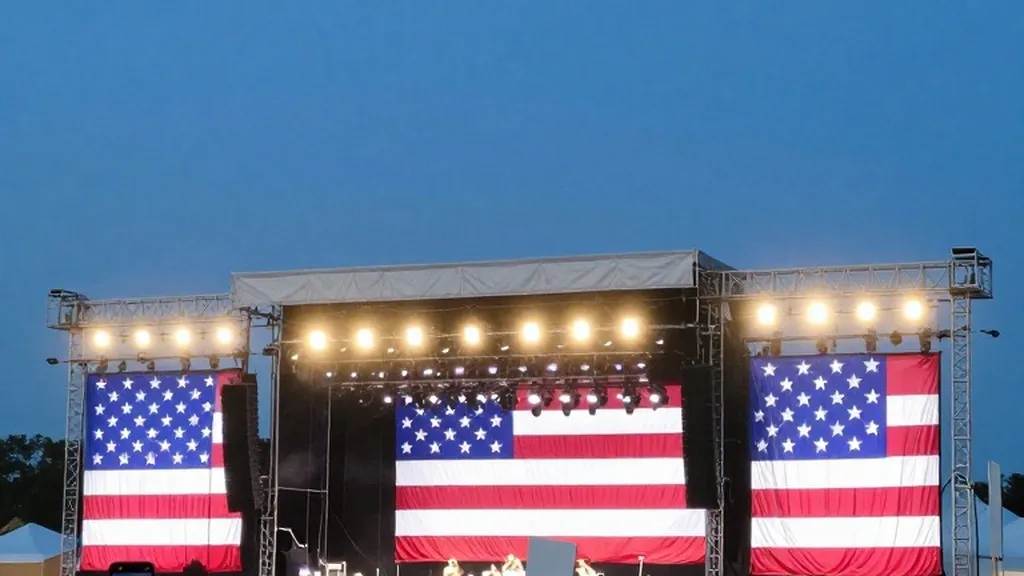
President Donald Trump held dozens of rallies across the country during the 2026 midterm election cycle, urging supporters to treat the race as if he were personally on the ballot. This strategy was a central feature of his campaign efforts, aiming to energize the base and frame the election as a referendum on his administration. The rallies served as a backdrop for candidates who were both aligned with and opposed to the president, creating a dynamic where his presence was felt in every major district.
The president's approval ratings remained a point of contention throughout the campaign. While his supporters pointed to his economic messaging and border policies as reasons to back his party, critics cited his combative style and recent executive actions. Candidates found themselves balancing the need to signal loyalty to Trump with the desire to appeal to independent voters who were wary of high-stakes conflict. This balancing act was evident in the messaging of both Republican and Democratic contenders in key states.
Many candidates, particularly on the Republican side, kept a visible distance from the president during the final weeks of the campaign. This distancing was often strategic, as some sought to present themselves as independent voices rather than mere extensions of the White House. In several states, Republican candidates emphasized their local issues and experience, subtly differentiating themselves from the national narrative driven by Trump's rallies. This approach was seen as a way to mitigate any potential negative spillover from the president's public statements.
Trump's claims of widespread fraud, which he labeled as false but persistent, added another layer of complexity to the election. He frequently took to social media to assert that the election process was under attack, a narrative that resonated with some of his base but raised concerns among independent voters. These claims often followed close races or when his party faced potential losses, leading to a cycle of public disputes that kept the election in the news well after the polls closed.
Democratic candidates also navigated the president's influence, often using his approval numbers and public statements to contrast their own platforms. They argued that voters were tired of the divisiveness that Trump's rallies brought and wanted a focus on cost of living and infrastructure. This counter-narrative was a key part of their outreach to undecided voters, who made up a significant portion of the electorate in swing districts.
The results of the 2026 midterms reflected this complex interplay. In states where Trump held rallies, the turnout was high, but the margin of victory was often narrower than expected. This suggested that while his rallies mobilized his base, they did not necessarily translate into a sweeping victory. In other areas, candidates who maintained a distance from the president fared better, indicating that the president's brand was not universally effective in 2026.
Political analysts noted that the election highlighted the dual role of the president as both an asset and a liability for his party. His ability to energize voters was matched by the potential for his statements to alienate moderates. This dynamic is likely to shape the relationship between the executive branch and Congress in the coming years, as both sides prepare for a period of intense scrutiny and potential conflict.
Looking ahead, the 2026 midterms set the stage for a more assertive Congress, with Democrats ready to launch investigations and Republicans determined to defend the administration. The president's combative stance, as signaled by his recent social media posts, suggests that he is prepared for a fight. This sets the tone for the next two years, where the balance of power will be tested and the legacy of the 2026 elections will be defined.
The election also saw a wave of historic firsts, with Native American women making significant gains in political office. This shift in representation was a notable feature of the 2026 midterms, reflecting broader changes in the electorate and the political landscape. These victories were celebrated by advocates as a sign of progress, even as the national debate over the president's role continued to dominate the news cycle.
In the end, the 2026 midterms were a referendum on the president's influence and the direction of the country. The results showed that while Trump's rallies were a powerful tool, they were not a guarantee of victory. Candidates who adapted to the unique political environment of 2026, balancing loyalty with independence, were the ones who emerged as leaders in the new Congress. This outcome underscores the evolving nature of American politics and the ongoing challenge of representing a diverse and often divided electorate.