Tesla Delays Optimus Robot Deliveries to 2027 Amid Hand Design Challenges
The company is pushing back the launch of its humanoid robot to the end of 2027 as it struggles to resolve technical issues with the hands and artificial intelligence.
By Christopher Singh ·
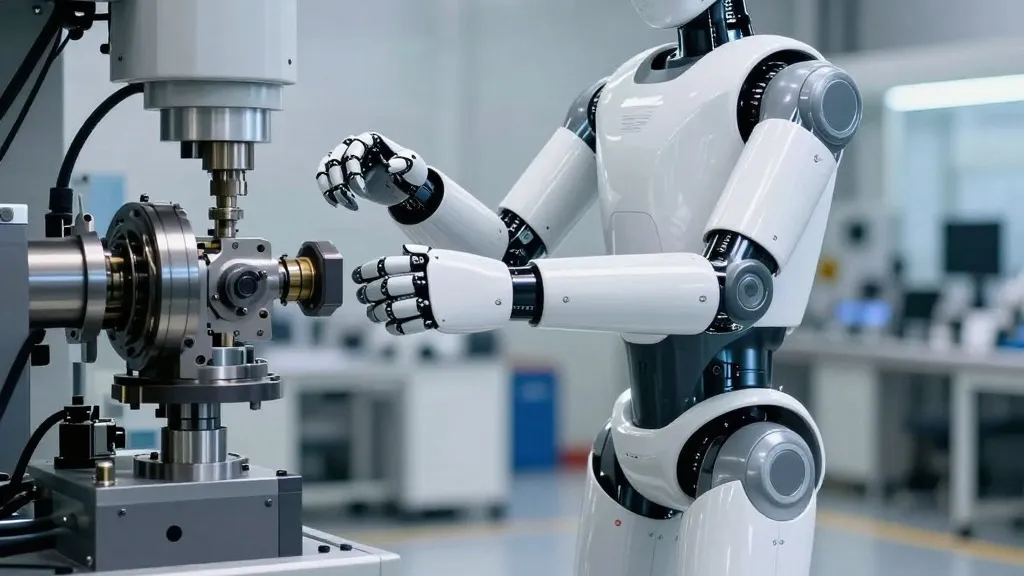
Tesla is pushing the launch of its humanoid robot, Optimus, to the end of 2027, a delay announced by CEO Elon Musk during the company's Q3 2026 earnings call. The company is still working to resolve significant technical hurdles involving the robot's hands, its durability, and its artificial intelligence.
Musk stated that early production of Optimus has begun on a high-volume line in Fremont, California, the former site of Model S and Model X manufacturing. While most of the assembly line, which is designed for an annual output of one million robots, is installed, reaching that capacity will take at least a year. The process is slowed because parts of the robot's design are still being modified.
The primary obstacle, as identified by Musk, is the design of the robot's hands. During the call, an Optimus engineer pointed to the hand as a particularly difficult hardware component, along with custom gears that raise reliability concerns. Musk explained the need for a delicate balance: fingers must be soft enough to handle fragile objects but also durable enough to withstand constant use, noting that unlike human skin, robot parts cannot heal.
On the software side, Tesla is grappling with problems in its AI architecture. The company plans to address this by building a large fleet of 10,000 to 20,000 robots to train the system in a program called the Optimus Academy. Additionally, Tesla intends to install its new AI5 chip into Optimus robots around April 2027. Musk also promised a video within a month or two demonstrating the robot performing tasks that are not pre-programmed.
Tesla's timeline for external deliveries to other companies has shifted repeatedly. In 2024, Musk projected that high-volume production for outside customers would begin in 2026. In January 2025, he stated that 10,000 robots would be built that year, with several thousand performing useful work by year-end, a goal that was later acknowledged as not met. The current target for external deliveries is now the end of 2027.
Despite Musk's claim on the earnings call that 'there is no one that is even close to Tesla' in the race for a general-purpose humanoid robot, competitors appear to be on a similar or even earlier schedule. XPeng activated an automated production line for its IRON robot in Guangzhou and plans mass production by the end of 2026, with deliveries starting in the first half of 2027. The company has not yet shipped a unit to a paying customer.
Boston Dynamics, a subsidiary of Hyundai, began producing its electric Atlas robot in January. The company states that all of its 2026 deployments are already committed, including a project with Google DeepMind. In September, Boston Dynamics opened a training center in Georgia where Atlas is learning to sequence car parts. Hyundai plans to deploy 25,000 robots across its manufacturing plants in the coming years.
Tesla's own Q3 shareholder letter now refers to the robots currently coming off the Fremont line as the first production-quality units it has manufactured. This indicates that all Optimus robots built before this quarter were not considered production-ready. The company faces the same core challenges as its rivals: creating hands that can survive real-world work, ensuring robot reliability, and developing AI that can generalize to new tasks.
The company is currently developing the necessary hardware and software to address these issues. The development of the hands is ongoing, and the AI architecture is being refined. The company is also working to improve the reliability of the electromechanical design. The goal is to resolve these problems by the end of next year, when Tesla expects to begin delivering the robots to external customers for industrial applications.
The timeline for external deliveries has been pushed back multiple times. In 2024, Musk stated that Tesla would begin manufacturing Optimus for internal use in 2025, with high-volume production for other companies in 2026. In January 2025, he said Tesla would build about 10,000 robots that year, with several thousand performing useful work by year-end. He later admitted that none were. Now, external deliveries are a late-2027 target.
The company is facing the same challenges as other companies in the field. The hands must be durable, the robot must be reliable, and the AI must be able to handle tasks it was not trained for. The company is working to address these issues. The company is also working to improve the reliability of the electromechanical design. The goal is to resolve these problems by the end of next year, when Tesla expects to begin delivering the robots to external customers for industrial applications.