Strategic Pivot: Tesla Ends Cybertruck Plans for Australia and New Zealand
Seven years after taking initial deposits, the automaker has officially voided reservations in the region, citing the high cost of right-hand-drive certification against modest global demand.
By Christopher Singh ·
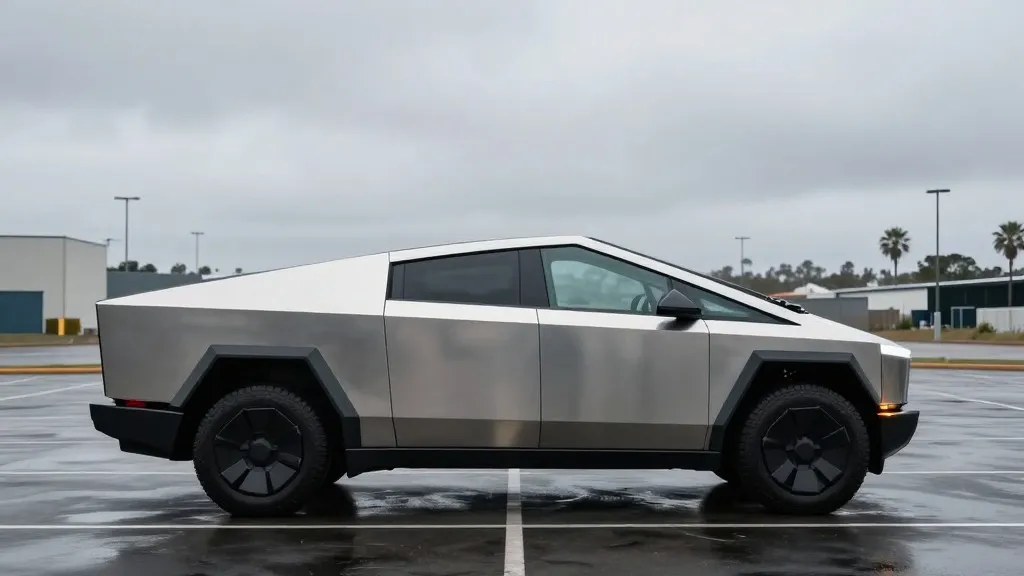
The long-standing uncertainty surrounding the electric pickup’s availability in the Southern Hemisphere has finally been resolved, with Tesla officially scrapping its plans for the market.
In emails sent to reservation holders across Australia and New Zealand today, the company confirmed that production of the Cybertruck for these regions has been discontinued. Customers are being informed that their orders are void and that full refunds for any payments made will be processed within 30 days. To encourage a shift in consumer behavior, Tesla is offering a free one-year subscription to its Full Self-Driving (Supervised) software for those who purchase a new Model 3 or Model Y instead. This move signals a clear strategic intent to convert dormant pickup reservations into sales of vehicles that are already manufactured in right-hand-drive configurations.
The decision marks the end of a seven-year wait for many consumers. Australian customers began placing A$150 deposits in November 2019, a period characterized by high anticipation for the vehicle. Although Tesla quietly closed the reservation page in May 2022, it did not refund customers at the time, leaving them in a state of limbo while the CEO repeatedly suggested that certification for other markets might occur the following year. A display tour in 2024 further fueled these expectations, but a right-hand-drive version never materialized.
The primary obstacle has been the vehicle’s left-hand-drive design. Markets such as Australia, New Zealand, the UK, and Japan require right-hand-drive vehicles, which necessitates significant re-engineering and local certification. Tesla has only launched the Cybertruck in left-hand-drive regions, including South Korea, the UAE, and several Middle Eastern countries. The European Union remains blocked due to pedestrian safety concerns. Given the combined population of Australia and New Zealand is approximately 33 million, the investment required to retool the production line for these two markets was difficult to justify.
Financial data underscores the rationale behind the cancellation. In the third quarter of 2026, Tesla delivered just 8,295 units categorized as 'Other Models,' a segment that now consists almost entirely of Cybertrucks since the Model S and X lines ended production. Estimates suggest Cybertruck sales are running at a pace of roughly 30,000 units annually, a fraction of the 250,000-unit annual capacity of its production line. This gap between production capability and actual demand has made the prospect of a dedicated right-hand-drive program financially unattractive for the company’s leadership.
Reactions to the news have been mixed, reflecting the prolonged delay in official communication. While some observers note that the cancellation was an inevitable outcome given the vehicle’s niche status, others criticize the four-year silence following the closure of the order page in 2022. Many reservation holders had already adjusted their expectations, noting that the current model differs significantly from the version promised in 2019, with higher prices and reduced range. For these consumers, the prospect of paying a premium for an imported, left-hand-drive truck was becoming less appealing as US sales figures declined.
Looking ahead, the Cybertruck appears to be consolidating its identity as a predominantly North American product. Tesla’s international strategy now focuses on finding buyers for existing left-hand-drive inventory rather than expanding manufacturing capabilities for new markets. For Australia and New Zealand, the electric pickup is no longer a coming feature of the local EV landscape, leaving buyers to rely on the company’s standard sedan and SUV offerings for their right-hand-drive needs.
More Business · Bad Service · Report a business · Got a Story?