Tesla Bets on 'Optimus Academy' to Solve Humanoid AI Data Gap
With no fleet to mine for data, Tesla is using thousands of robots to teach themselves how to work, aiming for high-volume production by next year.
By Marco Kapoor ·
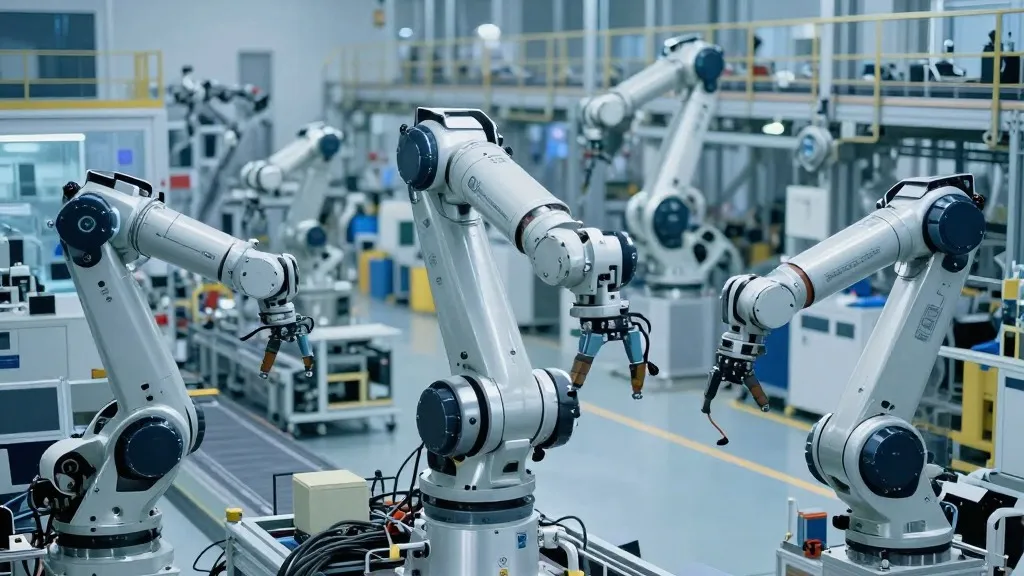
Tesla is facing a critical hurdle in its push to dominate the humanoid robot market: it lacks the massive fleet of vehicles that powers its autonomous driving AI. While millions of Teslas send real-world driving data back to headquarters, the company’s new Optimus robots have nowhere to learn from yet. To bridge this gap, the automaker has unveiled a plan to build an 'Optimus Academy,' a specialized facility where thousands of robots will practice tasks to generate the training data needed for future iterations.
The strategy relies on a self-improving loop. According to the company, 10,000 to 20,000 Optimus units will operate within this academy, executing a wide variety of physical tasks. Every unit coming off the production line in Fremont will contribute to this dataset, effectively allowing the robots to teach themselves. This approach addresses a key distinction between Tesla’s automotive and robotics divisions, where the latter cannot simply rely on existing consumer units to feed the neural networks.
Production of these machines is already underway at a high level. Tesla has confirmed that the robots rolling off the line inside its Fremont factory are the first to meet production-quality standards. In its third-quarter shareholder letter, the company stated that it has proven the current manufacturing process is suitable for a commercial product. This line occupies space that previously built the Model S and Model X, with the old vehicle assembly cleared out in just 46 days this spring to make way for a robot production setup sized for one million units annually.
CEO Elon Musk outlined the growth trajectory during Wednesday’s earnings call, describing the ramp-up as a classic S-curve. He noted that while the initial slope will be shallow, output is expected to climb toward roughly 20,000 robots per week as the line matures. Musk indicated that most of the necessary equipment for this capacity is already installed in Fremont, suggesting the infrastructure is ready to scale rapidly once the software and design refinements are complete.
The near-term focus is on refining the robot’s core competencies. The engineering team is currently working on the AI, electromechanical design, reliability, and service life of the Optimus platform. Musk expects this phase of development to be finished by the end of next year. Once that milestone is reached, Tesla plans to begin delivering Optimus units to outside companies, targeting roles that involve dangerous, repetitive, or around-the-clock labor.
Hardware upgrades are also on the horizon to support these improvements. Tesla intends to integrate its AI5 chip into the Optimus robots next year, enhancing their processing power. Musk stated that a new video demonstration should arrive within one or two months, showcasing the robot completing tasks driven by AI rather than preprogrammed motions. He criticized rival humanoid demonstrations for relying on scripted routines, arguing that those methods would not hold up in the unpredictable conditions of the real world.
The supply chain is beginning to align with these ambitious timelines. In September, Tesla certified Tuopu, Joyson, and Sanhua as mass production partners for Optimus components. Meanwhile, a much larger manufacturing facility is rising at Giga Texas. Recent drone footage shows the steel frame of that plant nearing completion, with Musk pegging the long-term target for that site at 10 million robots per year, signaling a massive expansion beyond the initial Fremont output.
Cost efficiency is a central pillar of the engineering strategy. Tesla executives noted that Optimus production costs are trending toward the expected manufacturing cost of the Cybercab, indicating that the robot is being designed for volume from the outset. However, the hands remain the most challenging component of the design. This area is currently the focus of much of the engineering effort, a point Musk highlighted during the X Takeover event earlier this month.