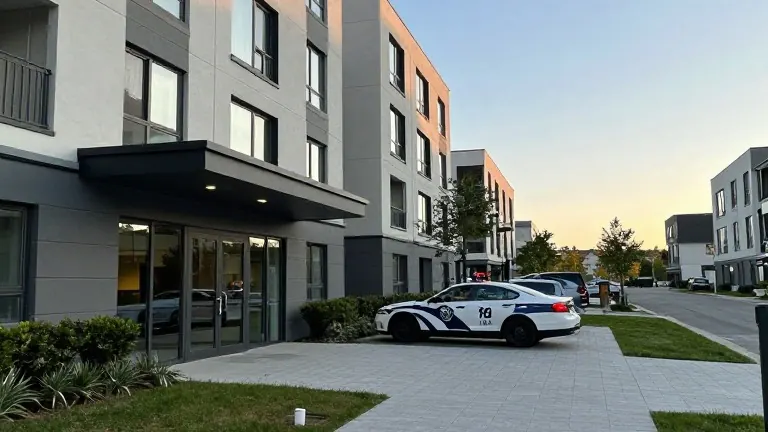
Oakland grad students analyze ballot measures
Seven graduate students research complex California propositions to help first-time voters navigate the midterms.
By Christopher Singh ·
Fourteen measures are on the California ballot for the 2026 midterm elections. These proposals cover healthcare, housing, voting, the environment, and taxes. The most contentious item is Proposition 40, a one-time asset tax on the net worth of approximately 200 billionaires in the state.
Voters face a crowded information space. Politicians, pollsters, special interest groups, and social media influencers all compete for attention. This creates confusion for people trying to find accurate, unbiased analysis. Ashley Adams, an associate adjunct professor at Northeastern University’s Oakland campus, described the situation as a recipe for confusion and chaos.
Adams teaches Techniques of Policy Analysis to graduate students in public policy and public administration. She assigned her all-women cohort of Bay Area professionals a specific task for this fall. They were to provide in-person analysis for undergraduate first-time voters on the Oakland campus.
The goal is to connect voters with real people whose political analysis is grounded in rigorous research. Mark Henderson, a professor of public policy at Northeastern, said this helps students test their analytical skills on live issues. He also noted that it gives students a chance to communicate their findings to the public.
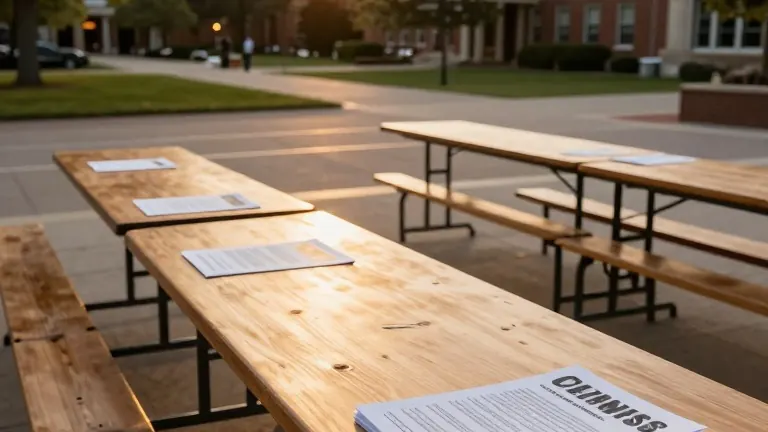
Seven graduate students each chose one of the 14 local measures to research. They presented their findings in a clear and unbiased manner. The event took place in the Adams Plaza on the Oakland campus during sunset. Students sat behind tables as undergraduates filtered out of their final classes.
Jovida Ross, one of the graduate students, focused on Proposition 40. She grew up in Northern California and worked with community-based nonprofits. She wanted to clarify the effects of the tax and dispel false rumors. Ross spent about 10 hours reviewing background information and media materials.
Ross found that opponents of the tax claimed a loophole exists. This loophole would allow legislators to expand the tax without voter approval. Ross cited expert commentary stating that this scenario is unlikely to happen. She included this point on her flyer to question the information being circulated.
Her final product was a double-sided paper flyer. It laid out the supporting and opposing arguments in plain terms. It also listed the groups on each side. Supporters of the measure include Sen. Bernie Sanders, U.S. Rep. Ro Khanna, and the California Democratic Party. Opponents include billionaires, Gov. Gavin Newsom, and the CA Teachers Association.
Undergraduate Jack Hill, a first-year student from Florida, left the tables with flyers from all seven students. He discussed what he learned with Emmett Deatte, a classmate from Massachusetts. Hill said he arrived in California with preconceived notions about the state’s politics. The contrast between Silicon Valley’s wealth and underserved communities in the Bay Area was difficult for him to ignore.
Marilyn Eakin, another graduate student, focused on Proposition 37. This proposal is a loan program for middle-income buyers of qualified new homes. Eakin helps operate a nonprofit therapy counseling agency. She said conversations with voters help them consider the needs of others.
Eakin believes that absorbing research-backed information helps voters make ethical choices. She noted that speaking with people who have different living circumstances makes one a better citizen. The students hope this approach empowers voters to cast informed ballots.