VR study: Physical actions boost learning speed
Participants using large gestures in a virtual environment categorized objects up to six times faster than those using buttons.
By Marco Kapoor ·
A new study indicates that large body movements can accelerate complex learning processes when paired with virtual reality.
Researchers from Florida Atlantic University and Brown University conducted the experiment to test how physical interaction affects cognitive categorization. Luke Rosedahl, an assistant professor of Biomedical Engineering at Florida Atlantic University, led the project using VR gaming technology.
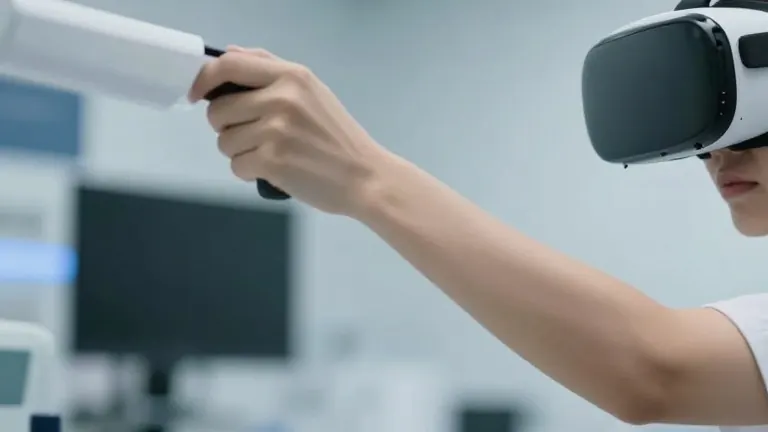
In the laboratory, participants wore VR goggles and viewed various striped objects on a screen. The goal was to teach them to sort these patterns into specific categories. The study divided participants into two groups with different interaction methods. One group used standard buttons to make their choices, while the other performed large, physical motions. These gestures included swinging a virtual lightsaber to strike stripes or punching a response box.
The results showed a clear difference in performance between the two groups. Rosedahl reported that the participants who used larger movements learned significantly quicker than those who pressed buttons. He stated, "With the larger movements like punching people learned somewhere between 4 and 6 times faster, which is just absolutely incredible."
The study focused specifically on the speed of learning rather than long-term retention. The findings suggest that engaging the body in the learning process may provide a measurable advantage in certain types of skill acquisition.