Vance tests 2028 messaging in midterms
The vice president's recent rallies mix populist economics with cultural appeals as he promotes Republican candidates.
By Marco Kapoor ·
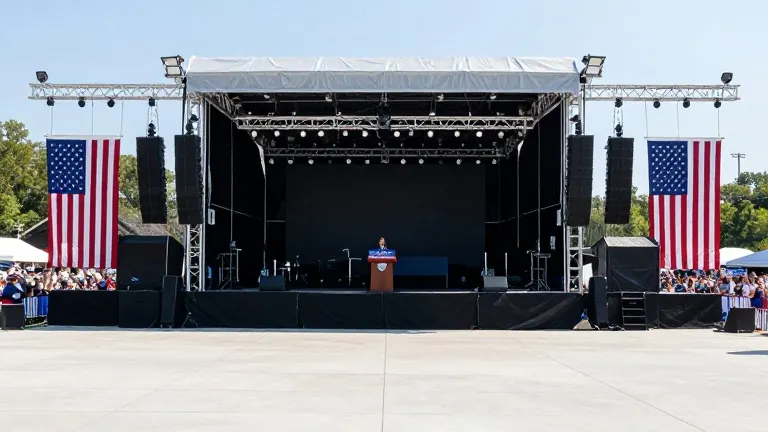
Vice President JD Vance is currently testing a specific political message aimed at ordinary voters. He combines economic nostalgia with cultural commentary to promote Republican candidates ahead of the midterm elections. This approach differs from President Donald Trump's current campaign style. Vance aims to define his own brand of populism while supporting the party's ticket.
The strategy emerged over the past year as Vance took on a new federal role. He serves as the head of the president's anti-fraud task force. That position allows him to discuss personal experiences while criticizing government waste. He has used these appearances to build a narrative distinct from the White House.
Vance spoke in Weatherford, Texas, on Thursday. He mocked Democratic Senate candidate James Talarico during the speech. Vance noted that Talarico said he had to grapple with his masculinity and whiteness. The vice president told the crowd, "And you know, James, the good news is, there ain't a whole lot to grapple with." This occurred the same afternoon Trump spoke in Rock Hill, South Carolina.
His recent tour included stops in North Carolina, Michigan, and Montana. In Howell, Michigan, Vance recalled childhood football teams sponsored by local small businesses. He said he remembered seeing the names of those sponsors on old jerseys. He observed that most of those businesses no longer exist. He blamed politicians in distant capitals who ignored the needs of states like Michigan and Ohio.
In North Carolina, Vance described a past era of racial harmony among working-class children. He said children of different backgrounds played football together without worrying about privilege. This narrative contrasts with current culture war debates. He framed his politics as a way to restore that traditional community bond.
Vance has also addressed economic pain points caused by federal policies. He avoided mentioning the Iran War directly in Montana. Instead, he compared current gas prices to spikes in 1979, 2001, 2007, and 2022. He attributed the price increases to global political instability rather than domestic decisions. He similarly discussed high beef prices as a result of industry consolidation.
The vice president has also shared personal anecdotes about working as a cashier at Dhillon Foods in Cincinnati. He mentioned that family members benefited from federal food programs. This story connects to his memoir about growing up in poor rural Ohio. It provides a biographical angle that distinguishes him from other candidates in the Republican field.
The next step in this process is the 2028 campaign cycle. That campaign is scheduled to begin in earnest next year. Vance's current rallies serve as a preview of the tone and content he may use in a full presidential run.