Musk Pours New Funds Into Tight Senate Race
Elon Musk directed over seventy-six million dollars to his political committee in early October, focusing heavily on the contested Texas Senate election.
By Kevin Iyer ·
Elon Musk has injected more than seventy-six million dollars into his personal political committee in the first half of October, a massive financial push aimed at securing Republican victories in the upcoming midterm elections. According to a pre-election report filed with the Federal Election Commission on Thursday evening, America PAC is ramping up its spending as the final stretch of the campaign begins. This latest infusion of capital underscores the billionaire's continued commitment to influencing the political landscape in his final weeks before voters head to the polls.
The committee spent nearly forty-three million dollars during that two-week period. It currently holds almost forty-seven million dollars in cash, which it intends to use in the remaining days of the race. The Texas Senate contest has become the primary focus of this new spending. The PAC allocated fifteen point two million dollars to the state, which is double the amount it spent there over the entire summer.
Most of that Texas-specific funding was directed toward opposing Democratic candidate James Talarico. Specifically, twelve point four million dollars went to advertisements attacking Talarico, while two point eight million dollars were used to promote his Republican opponent, Ken Paxton. Filings released on a daily basis indicate that another nine point one million dollars has been spent against Talarico since that initial report. This brings the total cycle spending against him to nearly twenty-eight million dollars, which represents about forty percent of all money the PAC has deployed to support or oppose candidates.
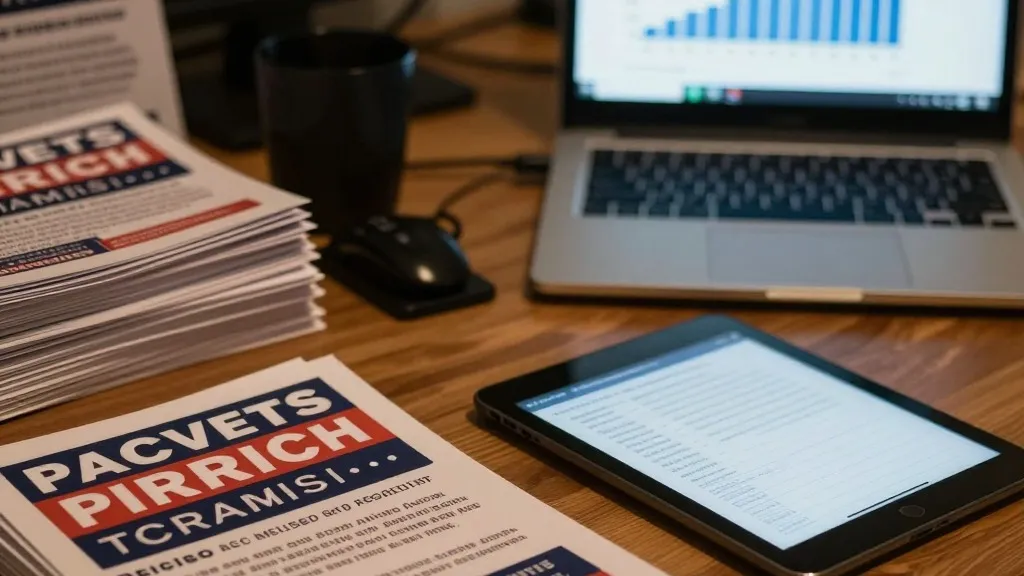
The group has also shifted its strategy toward digital platforms. In the same two-week window, America PAC spent eleven point four million dollars on online ads. This amount is comparable to what the group spent on traditional mail and text message campaigns combined. Altogether, Musk has given more than four hundred and forty-five million dollars to various Republican political groups this election cycle. An analysis of Federal Election Commission filings identifies him as the largest known individual donor for these midterms. More than one hundred and sixty-five million dollars of that total has gone to America PAC since July.
Musk has also been vocal about the race on social media. On Wednesday, he posted on X that there was something deeply wrong with Talarico. He later described the Democrat as a creep and claimed, without providing evidence, that Talarico would vote to take away children and transition them. Earlier in the month, Musk amplified a false claim that Talarico had received treatment at a mental health facility. Talarico responded to that claim the same day, stating that there is something deeply wrong with a political system that allows one trillionaire to buy his own personal U.S. Senator.
Despite the heavy spending, the Texas race remains competitive. An Emerson College poll of one thousand likely Texas voters, conducted from October seventeen to nineteen, found Talarico leading with forty-eight percent support. Paxton trailed at forty-six percent. The difference between the two candidates falls within the poll’s margin of error, which is three points. America PAC did not respond to requests for comment on the new filings.
The stakes for Musk extend beyond the outcome of the Texas election. If Democrats win the House, committee leaders have signaled they will investigate his role in the Department of Government Efficiency. They also plan to look into federal contracts for his companies and what California Democrat Zoe Lofgren described as an astounding number of conflicts of interest. A unified Democratic control of Congress would present even greater challenges for the billionaire.
Members of the Democratic party in Silicon Valley have identified additional targets for scrutiny. On Friday, representatives Sam Liccardo, Jimmy Panetta, and Ro Khanna sent a letter to the White House. They demanded an investigation into restrictions on SpaceX’s Starshield satellite service in Ukraine. In the letter, the group vowed that the next Congress would closely scrutinize federal funding awarded to Musk’s businesses.
As the campaign enters its final days, the financial war chest of America PAC appears ready for further deployment. The combination of traditional and digital advertising, along with high-profile social media commentary, suggests that Musk intends to remain a dominant presence until the votes are counted.