New Zealand election voting closes today
Strict silence rules prevent political talk until polls close at 7 p.m., with results expected shortly after.
By Marco Kapoor ·
New Zealanders gathered at polling stations on Saturday morning to cast their final ballots in the national election. The country’s Electoral Commission reported that more than 1.6 million of the 3.8 million enrolled voters had already voted by the end of Thursday. Polling places opened at 9 a.m. and will close at 7 p.m., after which the first results will be released.
A unique law governs the atmosphere on election day, making it a criminal offense to influence how anyone votes. This 19-hour blackout runs until the polls close. It bars political parties, news organizations, and social media users from discussing likely outcomes or campaign issues. The rule aims to keep the day free from external pressure.
The law extends to visual cues. Opinion polls cannot be released, and exit polls are banned. Partisan billboards must be removed by midnight. It is common to see supporters rush to dismantle roadside signs at the last minute. Even bumper stickers, T-shirts, and social media profile pictures fall under the rule. A breach can result in a fine of 20,000 New Zealand dollars.
News outlets may name candidates but must avoid any commentary that could sway a voter. They are not required to remove political content published before election day. Political leaders often appear in public while performing private errands. They plan outings with their families to maintain visibility without commenting on current events. In 2017, one party leader let reporters photograph her in sweatpants while painting a fence.
Some analysts argue the strict rules are unnecessary because most voters cast their ballots early. In 2023, more than half of the 5 million people in the country voted before the final day. However, supporters of the law say it protects the privacy of the voting process. Instead of debating politics online, many New Zealanders share photos of dogs at voting places.
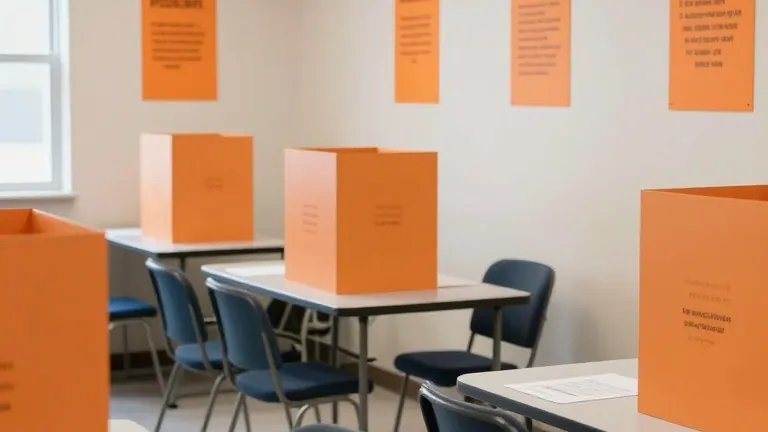
The color orange is used cautiously throughout the election process. Signs outside venues and the jackets worn by electoral officers are bright orange. The election mascot is also orange. This shade is chosen because it is not associated with any major political party. This helps maintain the neutral tone required by the law.
New Zealand has a single-house parliament with no states. The central government holds significant power over the nation’s direction. Elections occur every three years. Voters select their preferred party and a local candidate. A party or coalition needs more than half of the seats to form a government.
Voting is not compulsory, but enrollment is required. New laws passed in December 2025 set a cutoff for enrollment 13 days before election day. Those who missed the October 25 deadline could be turned away from polling places. The Electoral Commission aims to release results from 95% of votes by the end of Saturday night. A final result, including ballots cast abroad, is expected by November 27.