New plans put astronauts on the Moon by 2028
NASA has finalized its lunar architecture, shifting docking points to make the 2028 landing timeline more realistic for its partners.
By Kevin Iyer ·
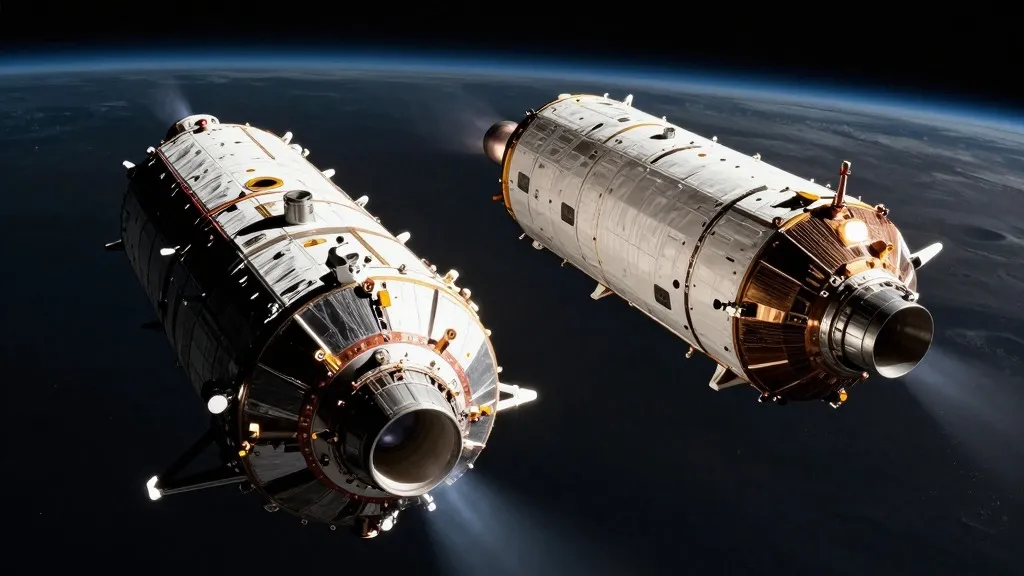
NASA officials outlined a new roadmap on Friday that aims to bring humans back to the lunar surface by 2028. The agency confirmed specific changes to how spacecraft will connect in space. These adjustments remove technical hurdles that previously threatened the schedule.
The timeline remains ambitious but grounded. NASA expects the Artemis III mission to launch in the summer of 2027. This flight will serve as a test, demonstrating docking capabilities near Earth. The crew will link up with both the Blue Moon lander and the Starship vehicle. Following this demonstration, the agency tracks a 2028 launch for Artemis IV. That mission will mark the first actual landing on the Moon under the current program.
The structural changes are significant for the companies building the hardware. For SpaceX, the plan now requires the Orion spacecraft to dock with the Starship lander in high-Earth orbit. Previously, the two vehicles were scheduled to meet in a specific orbit around the Moon. That earlier location required more energy and posed other difficulties. By moving the rendezvous closer to Earth, the new architecture simplifies the process for SpaceX engineers.
Blue Origin faces a different set of constraints. The agency’s plan for the company involves four launches of the New Glenn rocket. Notably, this architecture does not include any refueling operations between spacecraft. The Blue Moon lander will operate independently during the ascent. However, it may rendezvous with Orion in low-Lunar orbit. This approach avoids the complex logistics of in-space propellant transfers.
NASA Administrator Jared Isaacman expressed confidence in the revised strategy. He stated that the agency is on an achievable path. “We have the mandate, we have the resources, and the support from our stakeholders to be able to execute, and that’s what we intend to do,” Isaacman said. His comments reflect the agency’s commitment to holding the timeline despite the engineering challenges.
The shift in plans follows the cancellation of the Lunar Gateway project earlier this year. That decision inadvertently solved a major problem for SpaceX. The agency had previously required a docking in a near-rectilinear halo orbit. The Gateway was designed to support that specific orbital path. Without it, NASA was free to alter the meeting point. This flexibility allowed the agency to respond to SpaceX’s request to simplify the mission profile.
The news conference marked the first time NASA laid out these architectural changes in full detail. While some elements had been reported previously, the agency had not formally acknowledged the substantial shifts. The presentation provided a clear picture of how the pieces fit together. It highlighted the specific roles of Orion, Starship, and Blue Moon in the upcoming missions.
Stakes are high for the next few years. The success of the 2027 demonstration will determine if the 2028 landing holds. Engineers must verify that the new docking procedures work in high-Earth orbit. The Blue Origin team must confirm that their four-launch sequence is viable without inter-spacecraft refueling. If these tests pass, the path to the lunar surface becomes clearer. The agency has set a firm target, and the hardware must now meet it.