The Pocket Revolution Turns Twenty Five
A quarter century ago, Apple introduced a compact device that promised to store a thousand songs, fundamentally changing how people carried music.
By Christopher Singh ·
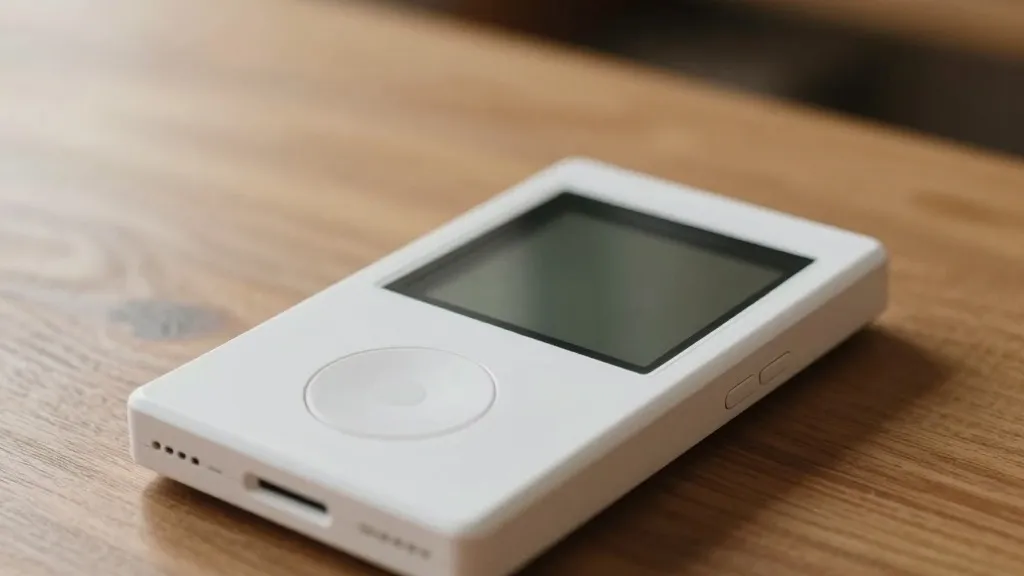
For two decades, the smartphone has dominated the pocket, making it easy to forget how revolutionary it was to simply carry music in a dedicated device. On this day in 2001, Apple CEO Steve Jobs stepped onto the stage to tease a breakthrough digital device that was not a Mac. The reveal of the original iPod marked a turning point, introducing a product that would become the favorite carry for gadget enthusiasts long before smartphones matured enough to render such specialized players redundant. The core promise was simple yet ambitious: for 399 dollars, consumers could fit their entire music library into their pocket.
The launch occurred during a pivotal moment for the Cupertino company. Jobs had already guided Apple through the beige era and into the Mac OS X period, with iBooks and iMacs establishing a solid consumer base. This revival was happening against the backdrop of a difficult economic climate, shortly after the dot-com bubble burst. Jobs envisioned the Mac as the center of a user's digital lifestyle, acting as a hub that connected cameras, camcorders, DVD players, and eventually, portable music players. He reasoned that because everyone loves music and the market lacked a clear leader, this was the optimal entry point.
At the time of the announcement, the portable audio landscape was fragmented. Small firms like Creative and Sonic Blue, along with the giant Sony, offered players, but Jobs argued none had found the right recipe for digital music. Four mainstream options existed: CD players, MP3 CD players, flash players, and hard disk-based jukeboxes. Apple chose the hard disk path, introducing the device as an MP3 player with CD-quality sound that supported popular formats like MP3, WAV, and AIFF. Its 5GB capacity allowed it to hold 1,000 songs, specifically 1,000 typical pop tracks encoded at 160Kbps. For most users, Jobs noted, that was their entire collection.
The physical form factor was a primary selling point, made possible by a 1.8-inch Toshiba hard drive that was only 0.2 inches thick. The resulting device measured 2.4 by 4 by 0.78 inches and weighed just 6.5 ounces, lighter than most cell phones of the era. Its size was comparable to a standard deck of cards. Despite its compactness, it featured advanced capabilities including 20-minute skip protection and fast file transfers via a single FireWire 400 cable. Jobs claimed this connection was the first of its kind on a music player, capable of transferring an entire CD in five to 10 seconds, whereas USB connections of the time took about five minutes for the same task. Filling the device with 1,000 songs was estimated to take only 10 minutes, compared to five hours on a USB player.
Powering the device was a rechargeable lithium-polymer battery that provided 10 hours of continuous playback. Apple stated that an empty battery could recharge to 80% in just one hour. The design was praised for its minimalism and durability, featuring back and sides that were both sleek and robust. The controls were designed for single-hand use, incorporating an accelerated scroll wheel with a piezoelectric clicker for tactile feedback. This allowed users to quickly locate and play music by playlist, artist, or song. During the demonstration, the first track played was Building a Mystery by Sarah MacLachlan.
The third major innovation was the Auto-Sync feature with iTunes. iTunes 2 launched the same day, bringing features like MP3 CD burning and syncing support. This meant that libraries created and curated on a Mac would automatically synchronize with the pocket player whenever it was connected for charging or transfer. The device also functioned as a FireWire hard disk drive, adding utility beyond music playback.
The first iPhone did not arrive until early 2007, more than five years after the iPod debut. For over a decade, the two devices coexisted in Apple's product lineup. However, the iPod's prominence gradually faded as smartphones grew more capable. The final model, the 7th-generation iPod Touch, released in May 2019, was left unmaintained for a time before the product line was officially discontinued in May 2022. Today, the original device stands as a cultural landmark that defined a generation of personal media consumption.
The legacy of that October 2001 presentation remains evident in how we interact with digital media. The combination of compact hardware, intuitive software, and seamless integration created a standard that competitors would struggle to match for years. It proved that a simple, well-executed product could capture the imagination of millions and shift an entire industry toward digital formats. The story of the original iPod is not just about technology, but about a specific moment when the way people experienced music was permanently altered.