Surge in Space Cyber Attacks Leaves 1,100 Ships Unable to Steer
Israel's top cyber official warned that increased satellite connectivity and reduced human oversight have expanded the scale of invisible threats to global infrastructure.
By Christopher Singh ·
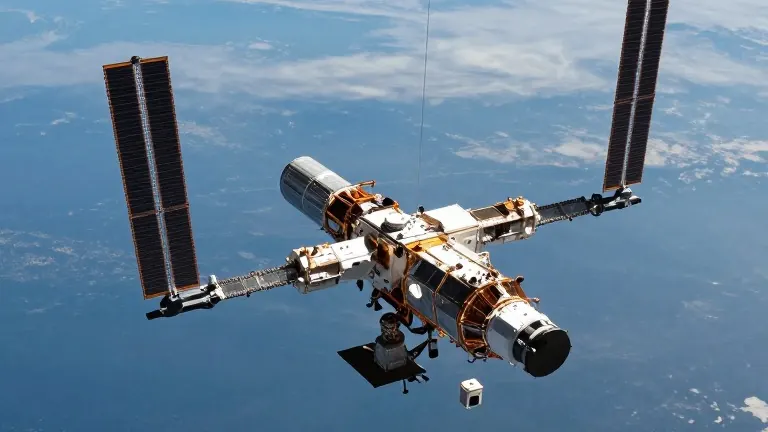
1,100 maritime vessels lost the ability to maneuver during the early 2026 Iran war, a disruption attributed to cyber attacks on space assets. The incident underscores the expanding impact of digital threats in orbit, according to Kobi Menashe, Director of Guidance and Spectrum Defense at the Israel National Cyber Directorate.
Menashe presented these findings on Monday at the Cyber Week Conference at Tel Aviv University. He described an ongoing, "invisible" cyber war in space that operates far from public view. Often, users experience minor inconveniences without realizing the root cause was a hack on a satellite network.
The threat environment has escalated since 2022. That year, Russia executed the Viasat hack against the American communications company's satellite internet system. The attack disrupted Ukraine's national communications network and affected parts of Germany and other European nations. Menashe stated that such incidents have increased in frequency since that event.
The volume of space machinery continues to rise, which Menashe noted has lowered the standard of cyber defense security. More satellites mean more potential targets and easier access for attackers. Current satellite networks communicate with many other space nodes rather than relying on a single ground station. This interconnectedness creates a risk where a hack on one satellite can rapidly spread to others, causing widespread damage.
Attackers employ various methods, including eavesdropping, spooling data, replaying signals, jamming, and location spoofing. Protocol exploitation also allows attackers to abuse space link communications with problematic commands. Menashe highlighted a specific vulnerability: many space operations now run autonomously with less real-time human validation for periods up to 48 hours. This gap allows attackers to compromise systems for longer durations without immediate detection.
These cyber attacks can disrupt national communications, as well as operations for cars, aircraft, and sea vessels. The sector is moving toward more autonomous functions, which increases the window of exposure for these digital threats.
Menashe concluded his address by outlining the technical vectors used in these attacks. He emphasized that the combination of higher satellite density and reduced human oversight creates a complex security challenge for operators.