Retailers Cash In as Día de Muertos Altars Become Mainstream Consumer Goods
The National Museum of Mexican Art celebrates its 40th annual exhibition as major brands like Target and Lego market the holiday tradition to a wider audience.
By Christopher Singh ·
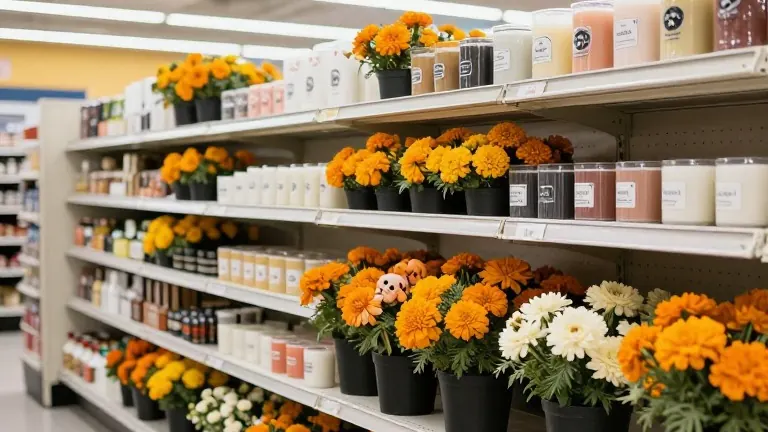
Major retailers have integrated Día de Muertos into their fall holiday inventories, signaling the holiday's shift from a niche cultural observance to a mainstream commercial sector. Target, Michaels, World Market, Walmart, and Kohl's now dedicate specific sections to the holiday, while Amazon lists supplies for creating ofrendas. Lego has released a set featuring an ofrenda on one side and a sugar skull on the other, further embedding the tradition into consumer goods. This retail expansion coincides with the 40th annual exhibition at the National Museum of Mexican Art in Pilsen, which runs through Nov. 29.
Cesáreo Moreno, the museum's chief curator, noted the change in public perception. In the early 1990s, when the museum first hosted these exhibits, Chicago teachers frequently called to ask if the holiday was appropriate for children. "They would want to know if it was an adult thing," Moreno said. He observed that the word "dead" often unsettled audiences. Decades later, he stated, "enough people now know the holiday is a celebration of life and memorializing." However, he added, "since Disney gave its blessing, the truth is we are now also wrestling with a post-'Coco' holiday," referencing the 2017 Pixar film.
Moreno expressed concern that commercialization could dilute the holiday's spiritual core. "My biggest concern is that it becomes melded into Halloween and that the spiritual aspect is watered down to sell stuff," he said. He compared this potential shift to the commercial treatment of Christmas and Easter. The museum, which has showcased ofrendas since 1987, aims to preserve the tradition's variety. The current exhibit, titled "Where Memory Lives: 40 Years of Día de Muertos," includes classic altars, art-driven pieces, and examples specific to Chicago communities.
Local artists have used the platform to educate and honor family members. Robert Valadez, a 63-year-old Pilsen artist, contributed to six past exhibitions. He learned about ofrendas through the museum's shows, noting that the tradition was not common in his childhood. "This exhibit has very much been an education," he said. Carina Yepez, a textile artist in her 40s, first encountered ofrendas at age 19 while working as a tour guide at the museum. She now builds altars at home and believes the practice creates a space to discuss grief and life.
The current exhibit features altars created by specific artists to honor deceased loved ones. Brookes Ebetsch, executive director of the Chicago Artists Coalition, built an altar for Gilberto Cárdenas, a former professor who died in late July. The altar includes a Smith Corona typewriter, Peet's coffee cups, and a package of Biscoff cookies. Ebetsch included a list of Cárdenas's accomplishments and organizations, such as the Smithsonian, to show who was influenced by him. "When you die, your memory belongs to everyone who was a part of you," Ebetsch said.
CHema Skandal! created a minimalist altar for his father, who died at 76 in January. The piece features a portrait drawn with ink and ground coffee, referencing his father's roots in Puebla. It includes a petate, a handwoven sleeping mat from his father's village, and 76 coffee beans to represent his years of life. Wisps of plastic symbolize the whistles used in Chicago during ICE protests, a cause his father supported. The artist described the piece as a reflection on conservation and legacy.
David Rios, a glass artist, constructed a triptych altar entirely of glass and 24-karat gold. The piece serves as an homage to those who did not survive border crossings on foot. It features a Virgin of Guadalupe made to look like ice, marigolds serving as eternal flames, and a red basket with a dove on top. Rios included rosary beads and Mexican candies, referencing his childhood experiences at swap meets. The altar is dedicated to the memory of his grandfather, who traveled to Florida annually to pick oranges.
More Business · Bad Service · Report a business · Got a Story?