One Dividend: Trump’s New Mandate for AI Data Center Energy
The President proposes that hyperscalers share surplus power with local grids to offset rising utility bills, a move critics say may be more symbolic than structural.
By Kevin Iyer ·
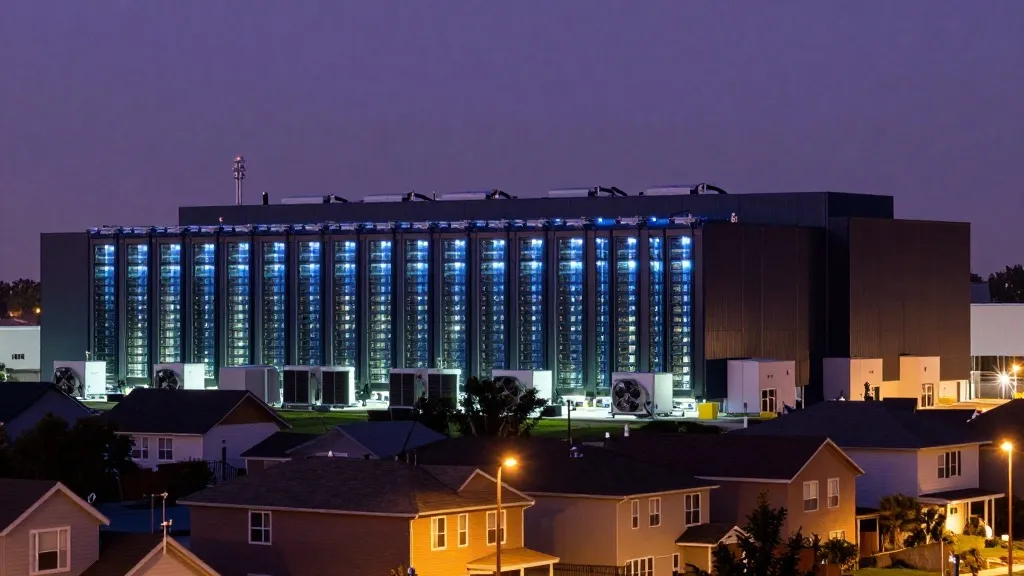
President Donald Trump has formally demanded that AI data center operators provide a financial or energy-based dividend to the local communities hosting their facilities. This new directive, outlined in a recent Truth Social post, aims to directly address the surge in electricity costs that has become a primary source of friction between hyperscalers and their neighbors.
The core of the administration’s argument is that these massive infrastructure projects should not just consume local resources but actively contribute to the regional grid. Trump specified that data centers are now mandated to generate their own electricity, a policy shift previously emphasized by his administration. Crucially, the new requirement goes a step further: any excess energy produced by these facilities must be either given to or sold back to the local community. The goal is to prevent local utility bills from rising, or potentially lower them, thereby making the presence of these often-unwelcome industrial giants more tolerable for residents.
This proposal comes amidst widespread local opposition to AI data centers. Communities across the United States have voiced concerns regarding noise pollution, water scarcity, air quality, and deforestation. By tying the mandate to energy costs, the administration seeks to mitigate the most immediate economic pain point. Additionally, a recently passed act already requires data centers to fund grid upgrades, ensuring that these costs do not fall on local taxpayers. The dividend concept appears to be an extension of this logic, potentially involving partial reimbursements for rising electricity rates.
However, significant questions remain regarding the practical implementation of this strategy. The term 'dividend' is economically specific, typically implying a distribution of profits, yet many new data center builds are likely to operate at a loss for years while recouping construction costs. Whether this mandate will result in tangible cash payments or simply a slight reduction in utility rates is unclear. Furthermore, the short-term power generation strategy for these sites relies heavily on gas-powered generators, which are noisy and polluting. Critics argue that swapping grid power for on-site gas generation may not be a net positive for air quality or noise levels for nearby residents, even if the price tag is lower.
The President’s post concluded with an urgent call to action, noting that unpopular data centers become popular when financial deals are struck. He urged stakeholders to 'MAKE DEALS, and get them built!!!' to maintain the administration’s momentum in the AI arms race against China. Yet, skeptics point out that the economic aspect is only one facet of the broader ecological and social challenges. Until the noise, water usage, and pollution issues are addressed, the energy dividend may prove insufficient to win over skeptical local populations.
For now, the mandate remains a high-level directive. How strictly it will be enforced, and whether it will truly alleviate the burden on local households, remains to be seen. The administration is betting that a lower electric bill will outweigh the other drawbacks, but the coming months will test whether this 'dividend' is a substantive relief or merely a political gesture.