Maryland voters approve new law to control congressional map
A ballot measure passed on Tuesday, transferring the authority to redraw state legislative lines to the party holding the governor's office.
By Kevin Iyer ·
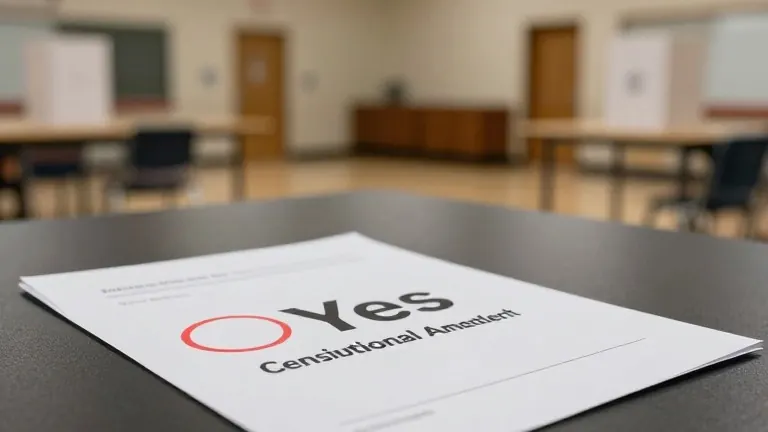
One legislative change was the most consequential outcome of the Tuesday vote in Maryland. The state's voters approved a measure that grants the majority party in the General Assembly the power to draw congressional district maps. This shift moves the responsibility away from independent commissions and places it directly in the hands of elected legislators.
The approval of the measure, known as Question 3, was a strategic victory for Governor Wes Moore. He campaigned on the platform that controlling the map was essential to preserving democratic representation. By winning this measure alongside his own reelection bid, Moore secured a tool that will allow the Democratic-led legislature to adjust boundaries for the 2030 census. This change gives the party in power more latitude to influence which candidates face which opponents in future general elections.
The path to passage was not without internal friction. Many Maryland Democrats expressed hesitation about expanding partisan control over the map. At polling locations across the state, voters from both parties voiced reservations about the measure. Gabriella Cox, a 23-year-old Democrat from Cambridge, stated she was personally against redistricting and did not view it as a core Democratic ideal. This sentiment reflected a broader concern among some progressives that the process could be abused by the party currently in charge.
State Republicans mounted a strong opposition campaign. They argued that the measure would give Democrats an unfair advantage to target U.S. Rep. Andy Harris, the sole Republican in the state delegation. Harris, who represents the 1st District on the Eastern Shore, urged supporters to stop the governor's agenda. He warned that if Democrats redraw his district, it could make his bid for reelection in 2028 more difficult. However, Harris will not be directly affected by the new rules until at least that election cycle.
Supporters framed the vote as a response to actions taken in other states. U.S. Rep. Jamie Raskin told his election night party that voters were tired of President Donald Trump's redistricting efforts in Republican-led states. Raskin claimed that the people tried to be gerrymandered out of power were winning in Maryland. He pledged to move forward with genuine federal redistricting reform to eliminate extreme partisan maps. The measure passed despite the efforts of both parties to sway undecided voters on the issue.
The context for this change includes a trend in several other states that favor Republicans. Those states have already redrawn their congressional maps as of September 2026. This action prompted a desire among Maryland Democrats to ensure they could respond if similar moves were made elsewhere. U.S. Rep. Johnny Olszewski supported the state's right to respond but noted a larger need for federal reform. He said he would prefer the need for such flexibility did not exist anywhere, but acknowledged the current reality requires a defensive strategy.
Governor Moore maintained that the redrawn district would put power in the hands of the people. He argued that the measure prevented the presidency from unilaterally reshaping the nation's electoral geography. The vote concluded with a definitive shift in state authority. The Democratic-led General Assembly now holds the pen for the next congressional map.