Maryland Delegate urges voters to approve Question 3
Dylan Behler argues the ballot measure allows the state to redraw districts in response to partisan changes by other states.
By Marco Kapoor ·
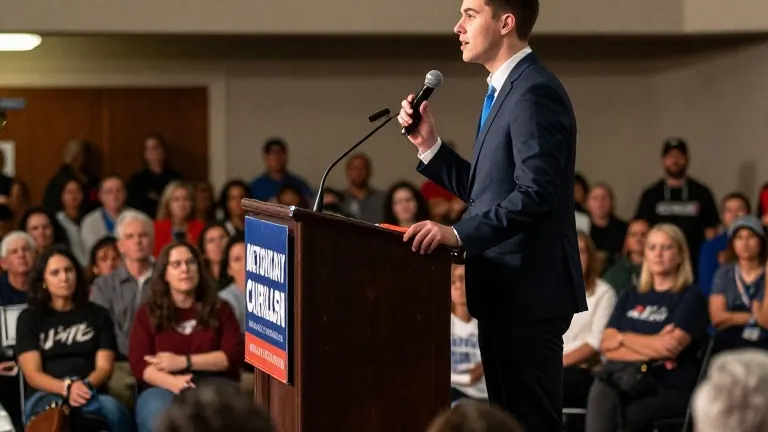
Marylanders can vote on Question 3 this November, a measure that would allow the state to redraw its congressional district maps in response to actions taken by other states. Delegate Dylan Behler, a Democrat representing District 30A in Anne Arundel County, is urging voters to support the proposal. He frames the decision as a necessary defense for Maryland’s interests against a shifting national political environment.
Behler states that President Donald Trump and his administration are currently prioritizing cuts to healthcare, food assistance, and rural hospital funding. He claims that because the administration is struggling to win support for these policies on their merits, it is now focused on altering the rules to maintain power and avoid accountability. In his view, the current push to redraw congressional districts in Republican-led states is a direct attempt to strengthen the administration's grip on Congress.
The Delegate argues that Congress holds the power to decide which presidential agendas become law, control spending, and conduct oversight. He believes that if other states redraw maps for partisan advantage, Maryland must have the legal ability to respond in kind. Without this flexibility, he warns, the state could lose its ability to defend priorities such as federal workers, research institutions, and public schools.
Behler acknowledges that fair national redistricting standards are a long-term goal. However, he says Maryland should not give up its own tools while waiting for a national solution that requires bipartisan cooperation. He notes that until Republicans join Democrats in passing nationwide reform, the state needs the capacity to act independently when its allies reshape the political landscape.
The measure would not force Maryland to redraw maps immediately but would create the mechanism to do so if other states take similar actions. Behler says this approach allows the state to demand accountability and support leaders willing to protect the community's interests. He emphasizes that while Maryland cannot control every decision made in Washington, it can choose how it responds to national efforts to consolidate power.
This ballot item represents a strategic choice for the state's political infrastructure. It shifts the focus from a permanent fix to a reactive capability. Behler urges voters to use their ballots to push back against what he calls power grabs and to protect Maryland's voice in the federal government.