Manx shearwaters suffer jet lag during Atlantic crossings
A new study reveals that these seabirds lose their internal clock synchronization, which distorts their sun-based navigation.
By Christopher Singh ·
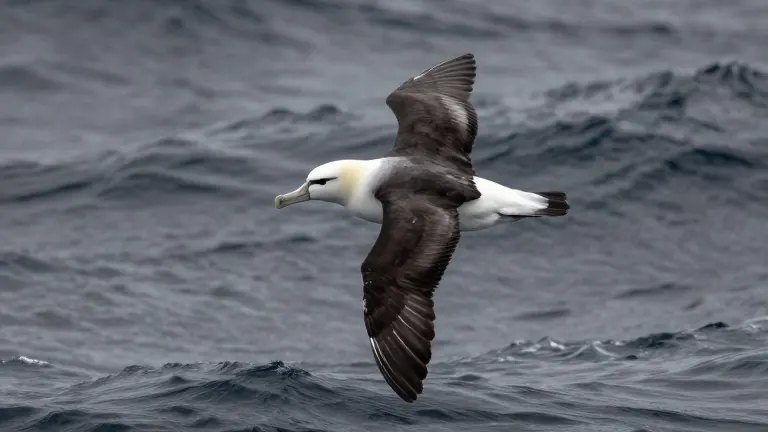
Traveling across multiple time zones disrupts the human body clock, a phenomenon known as jet lag. Scientists have now confirmed that Manx shearwaters experience this same disruption while flying over the North Atlantic.
A study published in Science details how these seabirds become desynchronized during long-distance flights. The birds rely on the sun to determine direction. When their internal clocks drift out of sync with the actual time of day, their navigational accuracy suffers. This creates a measurable error in their compass heading.
Patrick Lewin, a behavioral and sensory ecologist at the University of Oxford, led the research. He described the birds as medium-sized, comparable in stature to a pigeon. They feature white undersides and black backs, with long wings similar to those of albatrosses.
Manx shearwaters build burrows on coastal islands in the North Atlantic. Most of the population breeds near the United Kingdom and Ireland. Approximately half of the total population resides in Wales.
From their nesting sites, the birds fly to feeding grounds ranging from a few dozen kilometers to more than 1,000 kilometers out in the ocean. To return to their colonies, they likely use a map sense based on smell to locate their position. They then use the sun as a directional compass.
Lewin explained that navigation by the sun requires precise timing. An animal traveling south all day must adjust its angle relative to the sun. At sunrise, it flies 90 degrees clockwise from the sun. By midday, it flies directly toward it. At sunset, it flies 90 degrees counter-clockwise.
This process demands a reliable internal clock to track the time of day. While most animals possess such a clock, the internal timer in Manx shearwaters is not perfect. The study shows that the lag in this biological clock directly skews their ability to navigate accurately.