Kalshi CEO Defends Prediction Market Role in Midterm Elections
Tarek Mansour argues his platform offers clearer data than polls, despite concerns over regulation and media partnerships.
By Christopher Singh ·
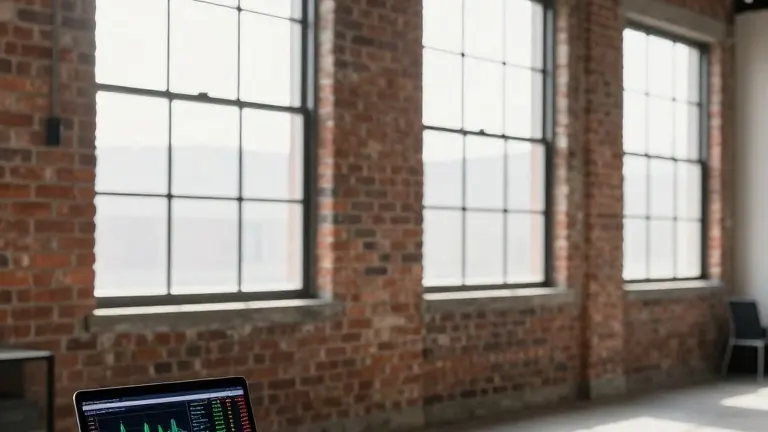
Tarek Mansour, the cofounder and CEO of Kalshi, sits in a converted twentieth-century printing plant in Manhattan’s Meatpacking District to defend his company’s rapid rise. The platform has become a central hub for tracking the 2026 midterm elections, a role that has drawn both praise and scrutiny from observers.
Mansour contends that Kalshi provides a more accurate and transparent view of political outcomes than traditional polling. He points to the Michigan Senate race, where the platform’s odds predicted a decisive victory for Democrat Abdul El-Sayed. That prediction proved correct, and Mansour says the platform’s overall forecast of a Democratic wave was accurate. He argues that the market reflects the collective judgment of millions of users rather than the opinions of a small group of political operatives.
The company recently raised one billion dollars at a valuation of forty billion dollars. Mansour acknowledges that the platform is new and that many people view it with suspicion. He says there is a presumption that new financial tools are bad, but he believes people simply do not understand how the markets work. He compares Kalshi to the stock market, arguing that it complements news coverage rather than replacing it.
A key feature of Kalshi is its structure as a federally regulated exchange. Users trade contracts against one another instead of betting against a house. This setup allows the platform to bypass state gambling regulations that apply to traditional sportsbooks. Mansour says this structure creates a clean incentive system: users are rewarded for being right and penalized for being wrong. He contrasts this with social media, where extreme claims often gain more attention than nuanced ones.
Critics point to the risks of gambling addiction and insider trading on the platform. Because almost any yes-or-no question can be traded, access to nonpublic information can give traders an advantage. Mansour acknowledges this risk but notes that Wall Street has similar rules. He says journalists who cover specific companies are often restricted from trading in those stocks, and a similar logic applies to Kalshi. He argues that while insider information might theoretically make markets more efficient, it creates an unbalanced marketplace in practice.
Kalshi has formed partnerships with major news outlets, including CNN, CNBC, and Fox. These networks use the platform’s numbers as data points for their forecasting segments. Mansour declined to disclose the financial terms of these deals, stating only that the company wants exposure from places where people consume information. He noted that the platform’s politics category has grown faster than its football market this season, suggesting that users are moving beyond sports to engage with other topics.
Mansour describes the platform’s news service, Kalshi News, as an amplification of its markets rather than a primary product. He says he does not personally look at it often, viewing it as a way to share headlines and memes that relate to tradable questions. He believes the platform encourages users to think critically about the world, citing a study by Philip Tetlock that found people who read the news regularly can outperform geopolitical experts at forecasting events.
The volume of trading on Kalshi for the midterms has approached one and a half billion dollars. Mansour says that roughly two-thirds of the platform’s activity is still sports-related, but the overlap between user bases is growing. He believes that the familiarity of sports betting serves as an educational tool, leading users to explore markets related to weather, economics, and politics.
The platform’s success has coincided with legal challenges in multiple states seeking to regulate prediction markets. Mansour personally donated hundreds of thousands of dollars to candidates on both sides of the political aisle during the campaign. He remains confident that the market’s structure will help depolarize political conversation by forcing users to assign a price to their certainty.
Mansour ended the interview by noting that the company is still in its early stages of influencing how the public perceives political risk. He said the goal is to reach a point where people naturally check market odds before forming an opinion on a close race, treating the data as a neutral input rather than a partisan signal.
More Business · Bad Service · Report a business · Got a Story?