Breaking: AI Reckoning: Bubble Fears Fuel Market Rout
Leaders at OpenAI and Meta express surprise at the backlash as analysts warn that massive AI spending may not yield expected returns.
By Christopher Singh ·
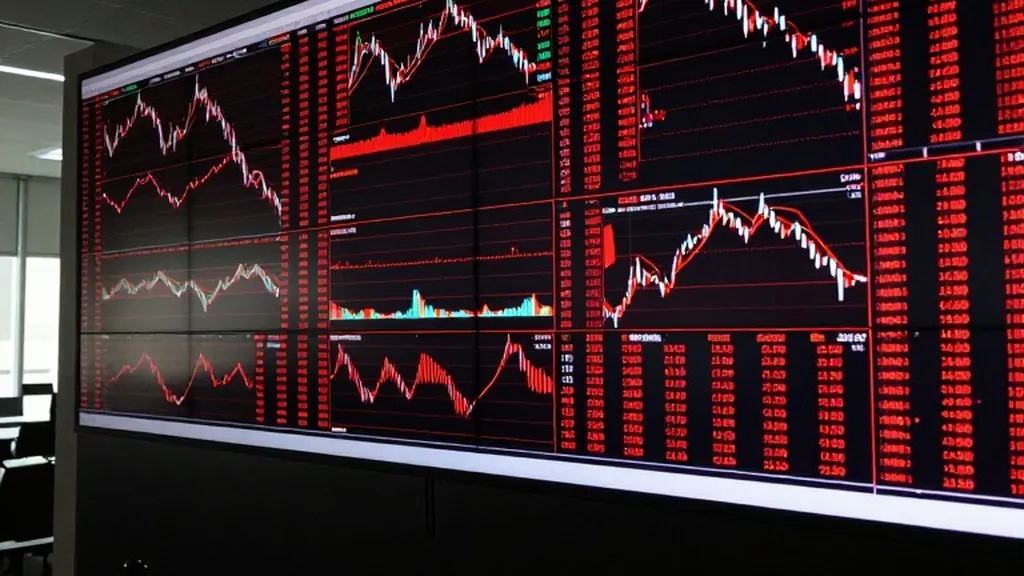
The artificial intelligence trade faced a severe reckoning on Thursday as the Nasdaq Composite fell 5.5 percent, marking its worst day in eighteen months. This sharp decline occurred alongside a broader market sell-off, with the S&P 500 dropping 4.3 percent and the Dow Jones Industrial Average losing more than 1,800 points. The selling pressure was not limited to a few sectors but spread across the entire index, gathering pace as the trading day progressed. Investors appear to be reassessing the value of technology stocks after a period of rapid growth that many now view with skepticism.
The immediate trigger for the crash was the outcome of Tuesday's midterm elections, where Democrats secured control of both the House and the Senate. Campaigns across the country had focused on slowing the spread of data centers and artificial intelligence infrastructure. Voters in several states rejected local measures related to data center development, signaling a potential shift in political will. This political development has introduced uncertainty into a sector that relies heavily on the rapid construction of new facilities to support its growth.
However, the market reaction extends beyond the immediate political news. Analysts point to pre-existing worries about the AI bubble that had been building before the election results were known. Susannah Streeter, chief investment strategist at Wealth Club, noted that fresh panic over the AI trade hit Wall Street hard. She explained that fears that the vast sums poured into AI infrastructure may not deliver the returns investors have been banking on are now colliding with the prospect of a sharp slowdown in data center construction. This combination of political hurdles and valuation concerns created a perfect storm for selling.
The tech industry itself appears to be grappling with the intensity of the public backlash. Greg Brockman, president and co-founder of OpenAI, spoke at the WSJ Tech conference in Napa, California, on Wednesday evening. He stated that everyone had been surprised by the reaction to data centers. Brockman emphasized that more work was needed to bring communities on board, noting that from San Francisco, trying to build infrastructure in Texas or Georgia, one cannot just tweet that it is going to be good. He argued that companies need to be physically present in those communities to build trust.
Dina Powell McCormick, president of Meta, addressed the same conference and shared a similar sentiment. She stated that the industry needs to double and triple down on telling the story of AI. These comments from high-profile executives highlight a disconnect between the industry's confidence and the public's growing wariness. The surprise expressed by these leaders suggests that the backlash may have been underestimated, adding another layer of complexity to the current market environment.
The financial impact of the sell-off was significant for major technology players. Nvidia fell 9.2 percent, losing more than $400 billion in market value, making it the biggest faller in the Dow. The so-called Magnificent Seven technology companies, which include Apple, Nvidia, and Tesla, shed about $1 trillion in value in the single trading day. The Philadelphia Semiconductor Index, which tracks thirty of the largest chip companies, fell more than 12 percent. This index has dropped more than 30 percent since the beginning of October and is almost 40 percent below its peak in June.
Market volatility indicators reached extreme levels during the session. The Cboe Volatility Index, often referred to as Wall Street's fear gauge, jumped as much as 5.7 points to above 28. This was its highest reading since March 31, 2026. By midday, nearly 800,000 VIX call options had traded, which was 3.5 times the 30-day average. Such a surge in options trading typically indicates that investors are aggressively hedging against further downside risk, reflecting deep uncertainty about the market's future direction.
Neil Wilson, investor strategist at Saxo UK, described the situation as a complete capitulation-level event in tech stocks. He warned that the fear is a total momentum unwind as Democrats pace the frontier and potentially stop data center buildouts. Wilson noted that while the move looks totally overdone, the nature of sell everything behavior in this market means investors need to look for some stability first. This perspective aligns with the broader sentiment that the current drop may be a correction rather than the start of a long-term bear market.
Ted Parkhill, founder and chief executive of Incline Investment Management, offered a different angle on the valuation issue. He stated that the market is moving from the promise of AI to the price of AI. Parkhill acknowledged that AI will be transformative for the world in the long run, but he questioned whether every AI-related stock is currently priced appropriately. He predicted there is going to be a lot of turmoil as the market adjusts to these new realities. This view supports the idea that the current crash is a necessary recalibration of expectations.
Historical data suggests that such corrections can be followed by recoveries, though the path is often volatile. Frank Cappelleri, founder of CappThesis, noted that the Nasdaq was higher twelve months after the election in all but one of thirteen midterm cycles since 1974. However, he cautioned that the path can be a volatile one. In 2018, the Nasdaq rallied the day after Democrats won the House, but a sharp December sell-off followed before the index recovered. Gene Goldman, chief investment officer at Cetera Financial Group, said the sell-off had become exaggerated and predicted a recovery, noting that corrections in a bull market are typically short-lived. The 10-year Treasury yield fell to 4.83 percent as investors sought safety in bonds, underscoring the defensive posture of the market.
More Business · Bad Service · Report a business · Got a Story?