Israelis Vote Tuesday in 120-Seat Knesset Race Centered on Netanyahu
Polls show a tight contest between pro-Netanyahu and anti-Netanyahu blocs, with Gadi Eisenkot leading the opposition challenge in a race that could turn on a single seat.
By Christopher Singh ·
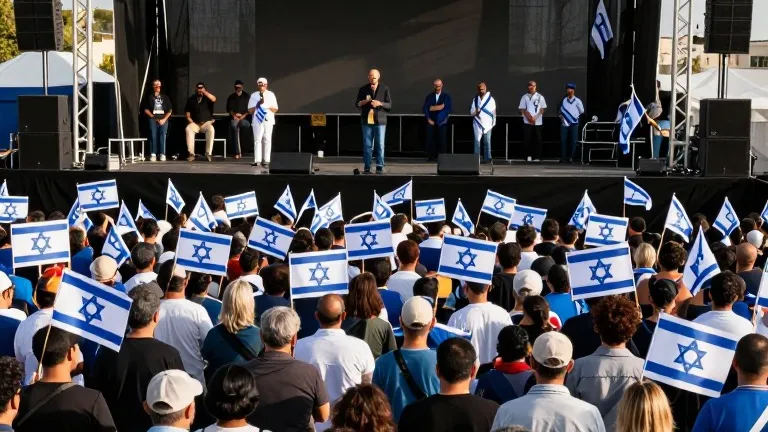
Polls place the two main camps in a dead heat for the 120 seats of the Knesset, a margin that could determine the outcome of Tuesday's election. Benjamin Netanyahu, who has held the premiership for 19 of the past 30 years, faces a referendum on his leadership rather than a traditional ideological battle. The race has coalesced into two distinct groups: those supporting the incumbent prime minister and those seeking to end his tenure.
Netanyahu first entered office three decades ago. His current term has been marked by the October 7, 2023, attacks at the Nova festival and southern kibbutzim, which occurred while he was in power. The subsequent war in Gaza resulted in more than 70,000 Palestinian deaths, a figure Israel says includes a third who were Hamas combatants. The conflict failed to eliminate Hamas, and Iran's nuclear program remains a threat despite earlier promises to destroy it.
The opposition bloc is led by Gadi Eisenkot, a former Israel Defense Forces chief of staff who entered politics four years ago. His party, Yashar, which translates to straight or direct, proposes US-style term limits for prime ministers. Eisenkot, the son of working-class Moroccan Jews, campaigns on a platform of transparency and action. At a rally in Modi'in, attendees praised his plain speaking style, contrasting it with the polished rhetoric of political veterans.
The opposition coalition includes former prime minister Naftali Bennett and Avigdor Lieberman, both former allies of Netanyahu who now oppose him. On the far right, Yishai Fleisher of the Otzma Yehudit party argues that Netanyahu has drifted left and must be pulled to the right. His party advocates for more settlements in the West Bank and Gaza, a ministry to encourage Palestinian departure, and the death penalty.
Netanyahu's campaign has focused on framing the choice between the right and Palestine. His posters place opposition leaders alongside party heads representing Palestinian citizens, who make up about a fifth of the population. Pro-Netanyahu media outlets, particularly Channel 14, have kept the opposition on the defensive. This week, Channel 14 host Yinon Magal called Eisenkot a Moroccan monkey, a slur that Eisenkot's supporters viewed as a sign of the opposition's strength.
Netanyahu faces legal and political challenges, including an ongoing corruption trial and the Qatargate affair. He also deals with the fallout from his attempt to curb the supreme court. Despite these issues, his loyal base remains intact. Allies claim that army and intelligence chiefs kept him from receiving credible warnings of the October 7 attack, a narrative many observers dispute.
The election result may hinge on a single seat. Many liberal, secular expatriate Israelis are returning home to vote, a group that standard polls often miss. These voters could tip the balance if the anti-Netanyahu bloc outpolls the prime minister's camp but falls short of a majority. Yair Golan, leader of the Democrats, expressed optimism that opposition leaders can agree on a long-term security strategy, avoiding the term peace process.
The political atmosphere is charged by recent events, including a state ceremony for the 1995 assassination of Yitzhak Rabin, which Netanyahu skipped in favor of sending a low-ranking minister. A video of young Israelis singing Rabin's favorite song at a Negev music festival circulated widely this week. The combination of returning voters and visible cultural shifts suggests a potential shift in the political landscape.