Court split over agency fines
Justices questioned whether federal departments can impose monetary penalties without jury trials.
By Christopher Singh ·
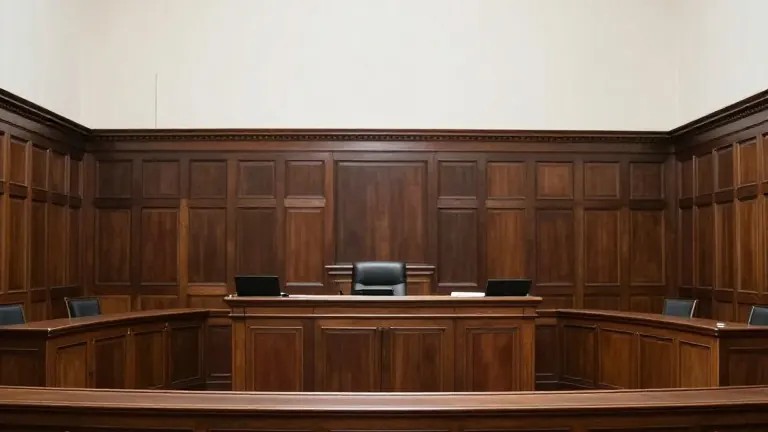
Supreme Court justices displayed a sharp division on Tuesday regarding the constitutional authority of federal regulatory agencies to impose civil penalties. The case, Sun Valley Orchards v. Department of Labor, will determine if executive branch bodies can fine businesses for violating federal statutes through administrative proceedings rather than federal court trials.
The dispute centers on a New Jersey-based farm that employed migrant workers under a federal visa program. The Department of Labor assessed a $500,000 fine against Sun Valley Orchards for housing violations and unpaid wages. These violations included unsafe drinking water, broken sinks, and the use of 20-bunk rooms for employee lodging. The farm argues that the agency lacks the constitutional power to levy these fines and that the process denies them the right to a jury trial.
Chief Justice John Roberts challenged Deputy Solicitor General Sarah Harris, who represents the Labor Department, on the scope of executive power. Roberts stated that the administration appeared to be stretching broad executive authority beyond its justified application. He suggested that agencies were potentially encroaching on the jurisdiction of the judicial branch.
Harris warned that limiting civil penalties to Article III courts would be a drastic measure. She described such a ruling as a nuclear option that would disrupt major federal programs, including Medicare, Medicaid, and federal student loans. Justice Elena Kagan asked why the government did not always pursue these penalties in court. Harris responded that doing so would be catastrophic due to limited enforcement resources.
Robert Johnson, the attorney for Sun Valley Orchards, argued that the relevant statute contemplates penalties but does not specify that they must be adjudicated in federal court. He maintained that penalties should be imposed by judges rather than administrative agencies. Justice Ketanji Brown Jackson countered that this position conflicts with Congress's intent to protect domestic workers from being undercut by foreign labor.
Justice Brett Kavanaugh expressed skepticism about the clarity of Sun Valley's proposed solution, noting that it created systematic issues for the future. Justice Samuel Alito described the potential outcome as a hodgepodge opinion. Justice Kagan interjected with a light touch, stating that the court does not write that type of decision. In rebuttal, Harris acknowledged the high stakes, stating that a loss would be a big deal but a messy ruling would be worse. She added that if the government loses, the administration will need to consult with legislative affairs immediately.
The oral arguments concluded with Harris urging the court to consider the broader statutory regimes that depend on current enforcement mechanisms. She argued that overturning the status quo would require Congress to rewrite multiple laws. The justices heard the final arguments without indicating a clear majority vote on the constitutional question.