China Trade Surplus Hits $1 Trillion
October import growth reached its highest level since May 2021, driven by high-tech and energy purchases.
By Kevin Iyer ·
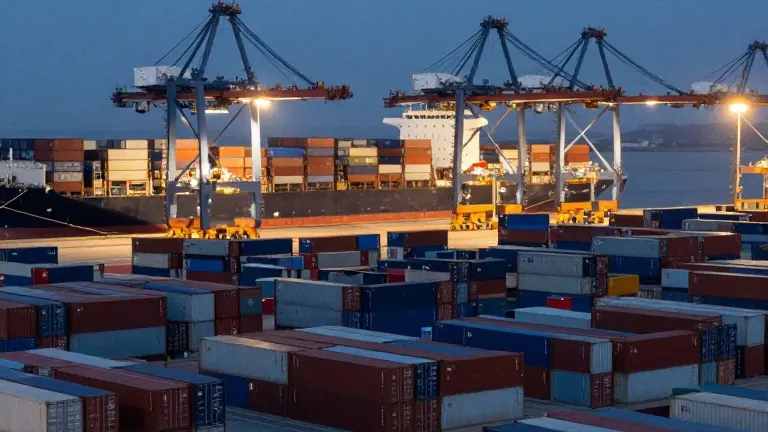
China's external trade balance reached a historic milestone this year, with the annual surplus crossing the $1 trillion mark as goods flows accelerated in October.
Customs data released Tuesday showed exports rising 35.2% year over year, a figure that exceeded the 33.5% growth predicted by analysts in a Reuters poll. This growth rate slowed slightly from the 36.3% increase recorded in September. Meanwhile, imports climbed 41.6% from a year earlier, jumping from the 31% growth seen in the previous month. This import surge was the strongest since May 2021 and significantly outpaced the 32% increase expected by market forecasters.
The spike in inbound goods was fueled by demand for technology, critical minerals, and energy. Tianchen Xu, a senior economist at the Economist Intelligence Unit, identified tech-related goods, copper, and energy supplies as the primary drivers. Data calculated from official figures showed imports of high-tech products surging 72% by value in October. Energy imports also increased sharply, with crude oil, liquefied natural gas, and coal values rising 41%, 50%, and 60%, respectively.
The monthly trade surplus fell to $105.3 billion in October, the lowest level since April, according to LSEG data. The year-to-date total now stands at $1.04 trillion, below the record $1.2 trillion set in 2025. This narrowing monthly gap has intensified calls from trading partners for Beijing to boost domestic demand to better balance its economy.
Export momentum remains tied to global demand for chips and artificial intelligence hardware. However, Nguyen Hoang Nam, a China economist at Capital Economics, noted that seasonally adjusted exports fell 2% month over month. A separate survey by China Beige Book indicated that new domestic and export orders slowed in October compared to the same period last year. Factory activity also contracted unexpectedly, as reflected in official PMI data.
Trade with the United States showed continued strength, with exports to the U.S. rising 32.9% in value year over year. Imports from the U.S. grew nearly 35%, creating a $32.7 billion surplus. This growth is partly attributed to a low base effect following tariff hikes in the previous year. Washington and Beijing extended their trade truce in September to January, including measures on critical mineral export controls and port fees.
In Europe, China's exports grew 24.4% while imports fell more than 4% in October, widening the surplus to $33.4 billion. The European Union agreed last month to limit imports of Chinese hybrid vehicles, a measure taking effect on December 1. Brad Setser, a senior fellow at the Council on Foreign Relations, stated that the cap of 350,000 units is above last year's export volume of 300,000 but well below the recent annualized pace of 800,000 units.
More Business · Bad Service · Report a business · Got a Story?