Pelham students reenact 1776 battle on Franklin Field
Middle and high schoolers participated in a living history event marking the 250th anniversary of the conflict that helped the Continental Army retreat from Manhattan.
By Marco Kapoor ·
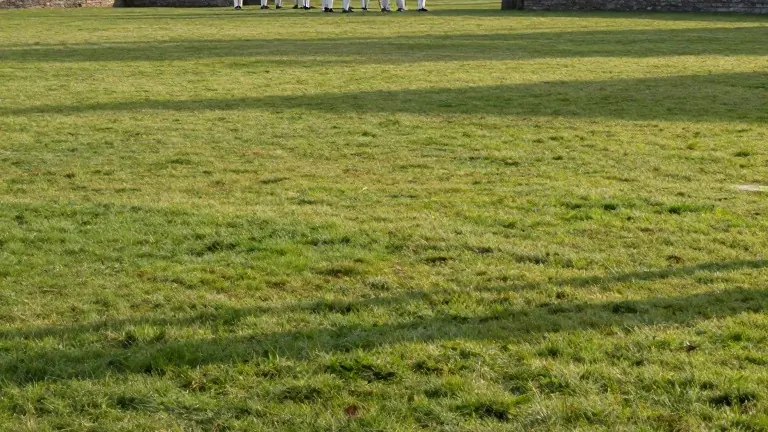
The 250th anniversary of the Battle of Pelham is approaching, and local schools have used the milestone to teach history through direct experience. On a recent day, students from Pelham Middle and High Schools gathered on Franklin Field to stage a reenactment of the 1776 engagement.
The demonstration was led by Sergeant Joe Ryan, a member of the 5th New York Regiment. He directed 8th and 10th graders as they took on roles in the conflict. Students dressed in full Revolutionary-era garb marched in formation across the field. They represented both sides of the battle, including General Howe’s Redcoats and Colonel Glover’s Marblehead Mariners.
The reenactment focused on the specific tactics used by the militia. The student actors playing the patriots took cover behind staged stone walls. They advanced against the British troops to demonstrate how the smaller force stalled a larger one. Teachers and school administrators fired muskets to signal the end of the simulation.
In the actual 1776 battle, Colonel John Glover commanded a militia of about 750 men. His force faced 4,000 British troops. Glover used stone walls and trees to hide his numbers. This strategy allowed the patriots to hold the line long enough for General George Washington to move the Continental Army from Manhattan to White Plains.
Sergeant Ryan treated the students like active soldiers during the drill. He called out uniform infractions and corrected students who stood out of line. The participants aimed their muskets at their peers to understand the physical reality of the fight.
The event allowed students to observe the mechanics of Glover’s strategy from the front lines. It moved the history lesson out of the classroom and onto the ground near the original site. The students gained a practical understanding of why the militia’s defensive positions were effective against a superior force.