New Yorkers face 96% rain chance Friday amid 68-degree high
A sharp drop in temperature and high precipitation odds define the weather for New York City on Friday, November 6, with a colder, wetter Saturday forecast.
By Kevin Iyer ·
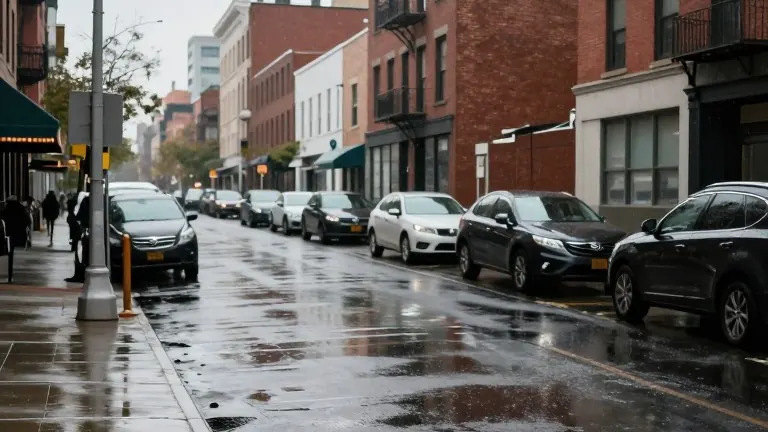
Residents of New York City will encounter a wet and mild start to the weekend on Friday, November 6, with a 96 percent chance of precipitation throughout the day. The forecast indicates that rain is the primary driver of the weather, making umbrellas a necessary item for anyone planning to be outside.
Temperatures will fluctuate between a low of 55 degrees Fahrenheit and a high of 68 degrees Fahrenheit. The perceived temperature, or heat index, will remain steady at 66 degrees Fahrenheit for both the peak of the day and the lowest point, suggesting that the air will feel consistent despite the slight variation in actual thermometer readings.
Wind conditions will remain relatively gentle. Gusts are expected to reach a maximum of 1.24 miles per hour during the first half of the day. In the evening, winds will pick up slightly, with gusts reaching 2.49 miles per hour. Meteorologists advise carrying light clothing due to the moderate temperatures and lack of strong wind chill.
Cloud cover will be minimal despite the high likelihood of rain. Daytime cloudiness is projected at 26 percent, dropping to 15 percent at night. The day will feature 10 hours of sunlight, with sunrise occurring at 6:32 a.m. and sunset at 4:47 p.m.
The weather pattern shifts sharply on Saturday, November 7. The forecast calls for a mix of clouds and clear skies, accompanied by intermittent and widespread rain. Temperatures will drop considerably, ranging from a low of 46 degrees Fahrenheit to a high of 64 degrees Fahrenheit.
Precipitation odds for Saturday vary by time of day. The chance of rain is 59 percent in the morning, rising to 80 percent in the afternoon, before settling back to 59 percent in the evening. This suggests that the afternoon will be the wettest period of the weekend.
New York City generally experiences a humid climate with cold winters and warm summers. Rain is frequent year-round, with thunderstorms common in summer and snowfall in winter. The proximity of the Atlantic Ocean helps moderate temperature extremes in the region.
The coldest months typically occur between December and March, while the hottest months are July and August. The national context for U.S. weather includes distinct regional differences. The East Coast features humid subtropical climates in the southeast and humid continental climates in the north, between latitudes 40 degrees and 70 degrees North.
In the western United States, three main climate types dominate. The semi-arid cold climate covers the central west, characterized by low precipitation and low temperatures. The southwest features arid climates, either cold or warm, with little rainfall. The coastal west has a Mediterranean climate, marked by wet, mild winters and dry, hot summers.