LAC Exports Jump Nearly 20% as AI Demand Boosts Regional Trade
The Inter-American Development Bank reports that Latin America and the Caribbean outpaced global trade growth in the first half of 2026, driven by AI infrastructure sales and rising commodity prices.
By Christopher Singh ·
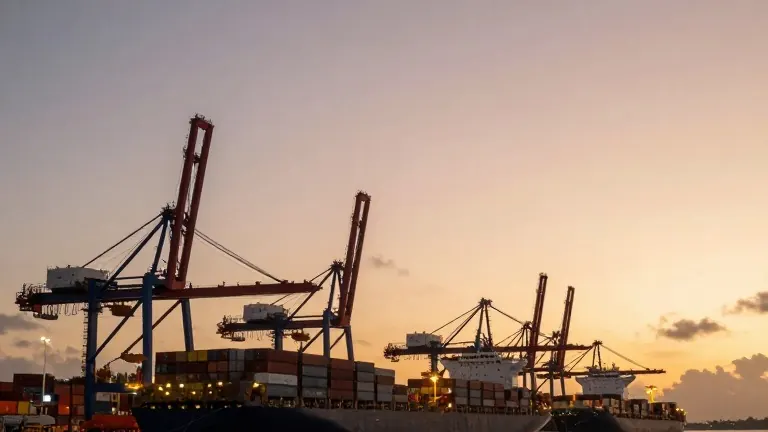
Latin American and Caribbean exports grew 19.5% in the first half of 2026, outpacing the 14.5% increase in global trade. The Inter-American Development Bank (IDB) attributes this surge to higher prices for oil and other commodities, alongside rising demand for infrastructure related to artificial intelligence.
The IDB's Trade and Integration Monitor 2026 states that this export performance creates an opening for the region to attract more foreign investment. Paolo Giordano, the principal economist in the IDB's Productivity, Trade, and Innovation Sector, noted that the region's trade resilience offers a chance to draw in capital. He suggested that pairing international trade commitments with domestic regulatory frameworks that provide investor certainty would help seize this opportunity.
Mexico led regional growth with a 24.6% increase, fueled by sales of AI infrastructure equipment to the United States. In the Caribbean, export growth reached 19.1%, driven primarily by activities in Guyana and Suriname. South America saw a 16.5% rise, supported by higher prices for mining and energy products, particularly oil.
The region's share of U.S. imports hit a record high of 22.1% in the first half of 2026. This occurred even as U.S. purchases from the rest of the world declined. The region also regained market share in Europe during the same period.
Despite these gains, the region received 4.5% less foreign direct investment in 2023 and 2025 than it did in 2012 and 2014. Its share of the global FDI stock fell from 7.1% to 6.0%. The report indicates that the region still attracts more FDI relative to its economic size than any other area.
The IDB report argues that the region can benefit from double taxation treaties, bilateral investment treaties, and trade agreements with investment chapters. It notes that these instruments are associated with a higher likelihood of investment ties between countries. The provisional application of the European Union-Mercosur trade agreement and the reshaping of global value chains by AI and the energy transition are cited as opening a window of opportunity.
The report concludes that the region's external trade agenda should be accompanied by reforms to national regulatory frameworks. It also recommends investment in public goods to lower the costs private companies face when expanding into international markets.
More Business · Bad Service · Report a business · Got a Story?