European Aviation: Bomb Alerts Force Diversions and Military Escorts
An Aer Lingus jet landed in Normandy after a diversion, while Bulgarian and Italian authorities reported multiple emergency landings and airforce interventions on 5 November 2026.
By Kevin Iyer ·

European air traffic experienced fresh disruptions on Thursday, 5 November, as bomb alerts triggered diversions and military responses across the continent. This latest wave of incidents occurred days after a separate series of threats affected at least seven flights, including two departing from the United Kingdom, and resulted in temporary airport closures.
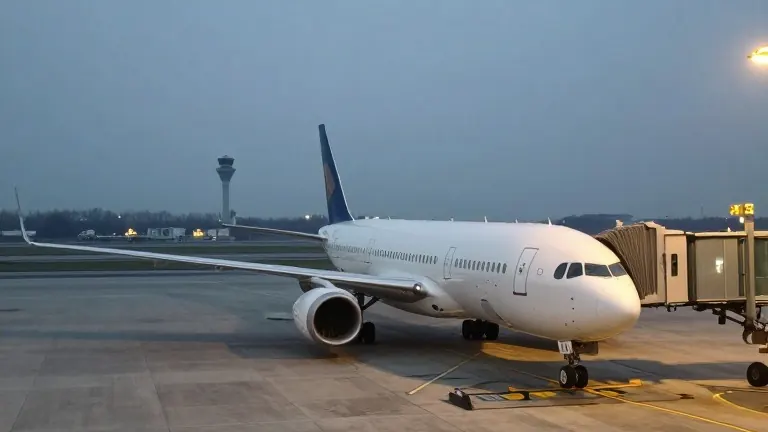
An Aer Lingus aircraft traveling from Dublin to Rome declared an emergency mid-flight after reporting a bomb alert. The French prime minister's office confirmed the jet was diverted to Normandy and landed safely at the Evreux military airbase. All 151 passengers and six crew members aboard were reported safe. Military bomb disposal teams began examining the aircraft immediately after landing. Flight-tracking data indicated the plane approached Paris before altering its course sharply, flying several loops before heading toward Evreux.
Bulgarian authorities reported three additional emergency landings shortly after the Aer Lingus incident. Two aircraft, one originating from Copenhagen and another from Madrid, landed in Sofia, according to the interior minister as cited by broadcaster bTV. A third aircraft that had departed from London landed in Plovdiv, local media reported. These landings followed bomb threats received by the carriers.
In Italy, airforce units escorted a Finnair jet operating a Helsinki to Rome service after it received a bomb alert. The Italian news agency Ansa reported that the aircraft was safely escorted to the capital. Meanwhile, Belgian media identified a Polish carrier, LOT, as the operator of an airliner that was forced to land at Brussels' Zaventem airport.
A UK government spokesperson addressed the recent pattern of threats, stating the country is well prepared to handle such incidents. The spokesperson described the earlier threats as malicious hoaxes. The source of the latest alerts has not yet been identified.
Matthew Borie of Osprey Flight Solutions, a firm that advises airlines on flight threats, suggested the geographic concentration of the incidents could point to a Russian connection. He also noted Iranian hybrid warfare activity in parts of Europe as a potential factor. Borie presented these observations without definitively assigning blame for the current alerts.